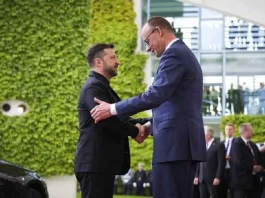
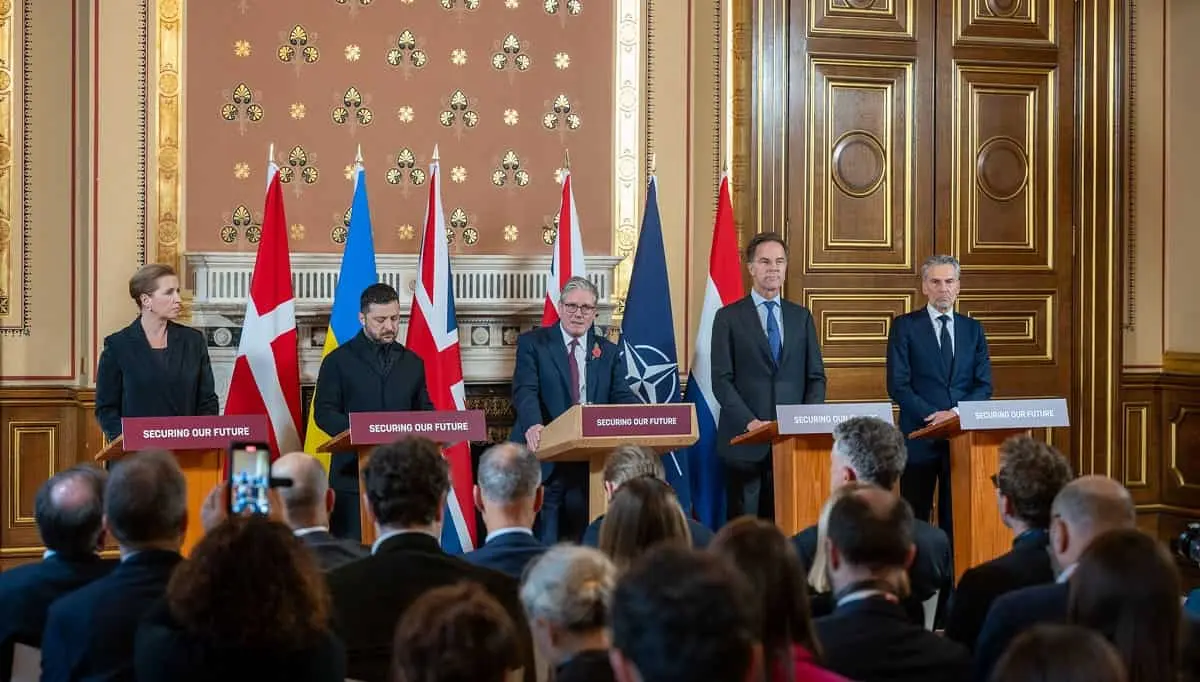
As the Russia-Ukraine war enters its fourth year, Europe is asserting its leadership in securing a lasting peace. On December 15, 2025, following intensive talks in Berlin, key European leaders issued a landmark joint statement pledging comprehensive security guarantees for Ukraine, including potential military intervention against any future Russian aggression. This bold commitment—backed by transatlantic cooperation—signals Europe’s determination to safeguard Ukraine’s sovereignty while supporting US efforts toward a negotiated settlement.
What the Joint Statement Promises
The Berlin discussions brought together Ukrainian President Volodymyr Zelenskyy, US envoys Steve Witkoff and Jared Kushner, and leaders from Germany, France, the UK, Italy, Poland, Denmark, Sweden, Netherlands, Norway, and Finland, alongside EU presidents Ursula von der Leyen and António Costa.
The resulting statement outlines a multi-layered framework:
- Military Deterrence: Sustained support to maintain Ukraine’s armed forces at around 800,000 troops in peacetime, enabling strong defense capabilities.
- Multinational Force: A European-led “coalition of the willing” (building on France-UK initiatives) to operate inside Ukraine, assisting with force regeneration, air defense, and maritime security.
- Ceasefire Oversight: US-led monitoring mechanism for early warning and violation response.
- Legally Binding Pledge: Commitment to restore peace via armed force, intelligence, logistics, economic measures, or diplomacy in case of renewed attack—echoing Article 5-like protections.
- Economic and Reconstruction Aid: Frozen Russian assets remain immobilized, funding Ukraine’s recovery; support for trade deals and compensation.
- EU Path Forward: Strong backing for Ukraine’s merit-based accession to the European Union.
Zelenskyy praised the progress, noting productive collaboration while acknowledging tough issues like territories remain unresolved. He emphasized that any deal must preserve Ukraine’s dignity and security.
Europe’s Strategic Autonomy in Action
This pledge comes amid concerns over US policy shifts under President Trump, who is pushing for a swift peace deal. While welcoming “significant progress” in Trump’s mediation, European leaders insist on ironclad guarantees before territorial discussions—ensuring Ukraine negotiates from strength.
Key voices:
- German Chancellor Friedrich Merz hosted the talks, framing them as a chance for a “real peace process.”
- French President Emmanuel Macron and UK Prime Minister Keir Starmer championed the multinational force.
- Italian PM Giorgia Meloni and others aligned on deterring future aggression.
A negotiation source highlighted the US role as “backstop” with unmatched intelligence and air support, underscoring complementary transatlantic roles.
The statement urges Russia to engage constructively, reaffirming that borders cannot be changed by force and territorial decisions belong to Ukrainians—potentially via referendum—once guarantees are in place.
Implications for Ukraine, Europe, and Global Security
These EU security commitments Ukraine represent Europe’s most concrete step toward strategic autonomy. By offering deployable forces and binding aid, leaders aim to break the “cycle of Russian aggression” spanning over a decade.
Ahead of an EU summit discussing €90 billion in aid for 2026-2027 (including reparations loans from Russian assets), this framework strengthens Kyiv’s position. It also reinforces NATO’s deterrence while supporting Ukraine’s EU integration.
As Zelenskyy stated post-talks: “We worked very well together.” Yet challenges persist—Russia’s stance on ceasefire and territories could test this unity.