In the evolving landscape of global geopolitics, particularly under the “Trump 2.0” era, Chinese scholars and state media have increasingly highlighted what they describe as Europe’s double standards in international relations. This perspective argues that Europe’s tolerance of US “bullying” toward non-Western nations contrasts sharply with its resistance when similar pressures target Europe itself, ultimately exacerbating transatlantic tensions and enabling greater US coercion worldwide.
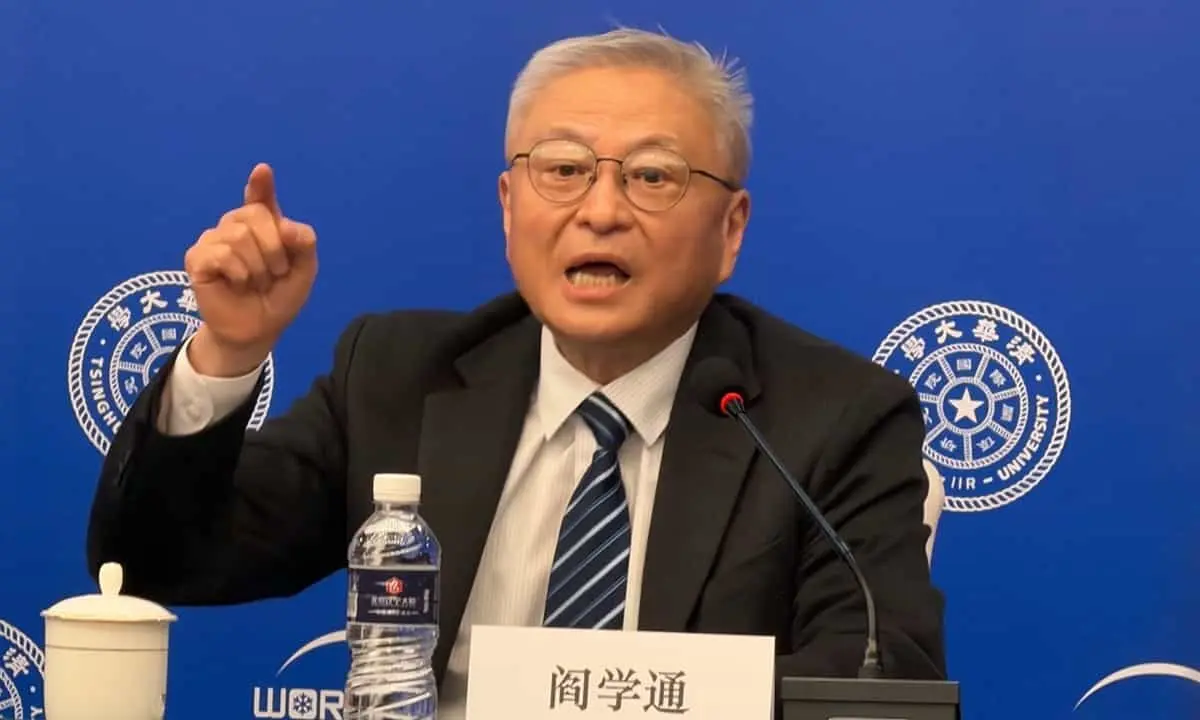
This view gained renewed attention following comments by Yan Xuetong, a prominent Chinese international relations expert and honorary dean of the Institute of International Relations at Tsinghua University. Speaking at the World Peace Forum Winter Series in January 2026, Yan critiqued Europe’s approach, suggesting it contributes to deepening US-EU rifts.
Understanding China’s Perspective on Europe’s “Double Standards”
From Beijing’s viewpoint, double standards manifest in several ways:
- Selective Outrage Over Coercion — China accuses Europe of supporting or remaining silent when the US applies economic sanctions, tariffs, or military pressure on countries in the Global South, including China itself. Examples include US-led trade restrictions on Chinese tech firms or accusations of unfair practices. Yet, when the US turns similar tactics inward—such as threats over tariffs on European goods, demands for higher NATO spending, or even discussions around territorial issues like Greenland—European leaders protest vigorously. Yan summarized this attitude as: “I support you bullying others, but you cannot bully me.”
- Security Hypocrisy and Dependency — A key Chinese critique centers on Europe’s reliance on US security guarantees through NATO while lacking independent military capacity. Yan pointed out that European nations admit they cannot fully secure their own continent yet participate in Indo-Pacific deployments, such as French, German, UK, and Dutch naval patrols in the South China Sea or participation in multinational exercises like RIMPAC. These actions are seen in China as aligning with US efforts to contain Beijing, despite Europe’s inability to handle threats closer to home (e.g., Russian aggression in Ukraine). China argues this shows Europe prioritizes US-led agendas over genuine self-protection, often through diplomacy rather than military overextension.
- Broader Ideological and Human Rights Framing — Chinese narratives frequently contrast Western “hegemony” and “bullying” with calls for multipolarity and a “Community with Shared Future.” They portray Europe as complicit in upholding an unjust international order—condemning China’s actions on human rights or territorial claims while overlooking similar issues in Western policies or allies. This is framed as enabling US unilateralism, from trade wars to interventions.
These arguments align with longstanding Chinese foreign policy themes, emphasizing opposition to “hegemonism” and promotion of equitable global governance.
Root Causes of Perceived Double Standards in China-EU-US Dynamics
Several factors fuel this Chinese interpretation:
- Transatlantic Strains Under Trump 2.0 — The second Trump administration has intensified pressures on Europe, including tariff threats, NATO burden-sharing demands, and unconventional proposals (e.g., on Greenland or Ukraine deals). China views Europe’s complaints as hypocritical given prior alignment against Beijing.
- Indo-Pacific Engagements — European navies’ increased presence in Asia—French carrier groups, German frigates in the Taiwan Strait (planned for 2026), and UK-Japan collaborations—is interpreted in China as unnecessary escalation, especially amid Europe’s own security challenges.
- Economic Interdependence vs. Strategic Rivalry — Europe seeks balanced ties with China for trade while addressing dependencies and “de-risking.” China sees this as inconsistent: criticizing Beijing’s practices while benefiting from economic links.
Implications for Global Order
China argues that Europe’s failure to address its “mindset problem”—acknowledging security shortcomings, prioritizing diplomacy, and rejecting double standards—prolongs US dominance and hinders a multipolar world. Yan suggested that greater European responsibility could resolve many transatlantic issues.
Critics of this view note that Chinese state media (e.g., Global Times) often amplifies such narratives to highlight Western divisions and promote Beijing’s alternatives, like the Global Governance Initiative as a counter to “capricious bullying.”
A Call for Self-Reflection?
From China’s perspective, Europe’s double standards not only fuel US coercion but undermine global stability by perpetuating an imbalanced order. As geopolitical shifts accelerate in 2026—with rising US-EU tensions and multipolar pressures—Beijing urges Europe to prioritize independent security and consistent principles.
Whether this critique resonates depends on evolving transatlantic dynamics and Europe’s strategic choices. For now, it remains a core element of Chinese discourse on why the West’s approach sustains coercion rather than fostering equitable cooperation.