
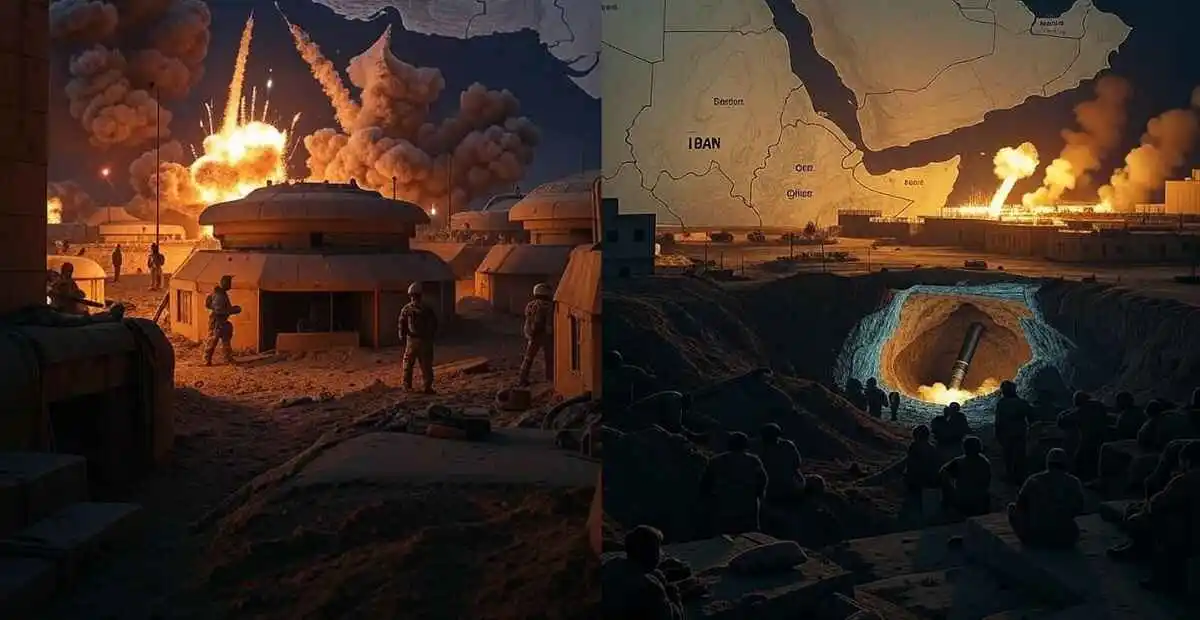
Amid escalating geopolitical frictions in the Middle East as of January 2026, Iran has delivered pointed warnings to key Gulf states, asserting that any assault on its territory would trigger retaliatory strikes against US military assets hosted in those nations. This development, rooted in longstanding rivalries and recent internal upheavals, highlights the fragile equilibrium in the region.
Iran’s Evolving Deterrence Posture: From Proxies to Direct Threats
Iran’s latest warnings to Qatar and Saudi Arabia mark a significant shift in its military strategy, driven by the erosion of its traditional proxy networks—often referred to as the “axis of resistance.” Historically, Tehran relied on groups like Hezbollah in Lebanon, militias in Iraq, and Houthis in Yemen to project power indirectly, allowing for plausible deniability while avoiding full-scale confrontations. However, following setbacks including the 2020 elimination of a prominent Iranian commander, the 2023-2024 Gaza conflict, and targeted strikes on nuclear facilities in June 2025, these alliances have weakened substantially.
This diminution has compelled Iran to pivot toward more overt capabilities, particularly its arsenal of ballistic missiles, which experts estimate could reach targets across the Gulf with precision and speed. A regional strategy analyst notes that this direct approach is not just tactical but political: failing to retaliate against an attack could undermine the regime’s domestic legitimacy amid ongoing protests fueled by economic collapse, currency devaluation, and widespread dissent. Protests, which began over economic grievances like the rial’s plunge, have evolved into calls for systemic change, with reports of over 2,600 deaths and thousands detained, exacerbating internal pressures.
Qatar, hosting the expansive Al Udeid Air Base—a critical hub for US air operations—finds itself in a particularly vulnerable position. Official statements from Doha describe any escalation as “catastrophic,” while precautionary US personnel relocations underscore the perceived immediacy of the threat. Saudi Arabia, with its own array of US military installations, has similarly been put on notice, reflecting Iran’s intent to broaden the scope of potential retaliation beyond immediate aggressors.
Historical Layers: A Cycle of Retaliation and Shadow Wars
The current standoff doesn’t emerge in isolation but from decades of intertwined conflicts. The US-Iran rivalry intensified post-1979 revolution, punctuated by events like the 1980s tanker wars in the Gulf, the 2003 Iraq invasion that inadvertently bolstered Iranian influence, and more recent direct exchanges. The 2020 drone strike on a key Iranian figure prompted missile attacks on US bases in Iraq, setting a precedent for measured but forceful responses.
Israel’s role adds complexity, with a history of “shadow wars” involving cyberattacks, assassinations, and airstrikes on Iranian assets. The June 2025 exchanges, where US forces joined in bombing nuclear sites, left Iran’s program curtailed but not eliminated, fueling Tehran’s vows to reconstitute missile and nuclear capabilities. This has prompted Israeli leaders to signal readiness for further action, while US rhetoric emphasizes deterrence amid domestic Iranian unrest. Compounding factors include Iran’s alliances with Russia and China, which provide diplomatic cover and potential support, though neither is expected to commit militarily.
Internal dynamics further deepen the crisis: Water shortages, economic sanctions, and leadership uncertainties— including the aging supreme leader’s waning influence—create a volatile mix, potentially leading to regime instability or even fragmentation along ethnic lines (e.g., Kurds, Baloch).
The Domino Effect: How Many Countries Could Be Impacted if War Erupts?
Should these warnings escalate into open conflict—such as US or Israeli strikes on Iranian targets—the repercussions would extend far beyond the immediate belligerents, potentially drawing in at least 15-20 countries directly through military, economic, or humanitarian channels, with indirect effects rippling to over 50 nations globally. This assessment draws from strategic analyses of regional alliances, basing agreements, and economic interdependencies.
Directly Affected Countries (Military and Immediate Risks: ~10-15)
- Iran and US: Core combatants, with Iran facing airstrikes and the US risking attacks on its forces.
- Israel: Likely initiator or partner in strikes, vulnerable to Iranian missiles or proxies.
- Qatar, Saudi Arabia, UAE, Bahrain: Hosts to US bases; Iran has explicitly warned of targeting these, leading to evacuations and heightened alerts.
- Turkey: Received warnings; fears Kurdish separatism spillover from Iran’s border regions.
- Iraq: US bases and Iranian-backed militias could clash, reigniting internal violence.
- Syria, Lebanon, Yemen: Weakened proxies might still mobilize, causing localized escalations.
- Oman, Egypt: Involved in backchannel diplomacy; potential refugee influx or economic disruptions.
Indirectly Affected Countries (Economic, Diplomatic, Humanitarian: 30+)
- Russia and China: Iran’s allies; could face sanctions or provide covert aid, straining global relations.
- European Nations (e.g., Germany, France, UK): Energy price spikes from Strait of Hormuz disruptions; refugee crises.
- India, Australia, Canada: Issued travel warnings; economic ties to Gulf oil.
- Global Oil Consumers (e.g., Japan, South Korea, Brazil): Potential closure of key shipping lanes could hike prices, affecting economies worldwide.
- Broader Middle East (e.g., Jordan, Kuwait): Stability threats from refugee flows or proxy activations.
In total, a full-scale war could disrupt global energy markets, inflate oil prices by 20-50%, and trigger humanitarian crises displacing millions, impacting nearly every continent through trade and security ties.
Charting a Course Away from Conflict:
Despite the grim outlook, avenues for de-escalation exist. Backchannel efforts by Gulf states like Oman and Qatar have already conveyed mutual warnings, urging restraint. International bodies could facilitate talks on nuclear transparency, economic relief, and protest resolutions. Analysts stress that deterrence must pair with dialogue: verifiable halts to missile reconstitution and protest violence could open doors to sanctions relief.
Ultimately, Iran’s warnings serve as a stark reminder of interconnected vulnerabilities. As one expert encapsulates, “You can’t strike Iran and expect containment— the chain reaction could engulf the region.