
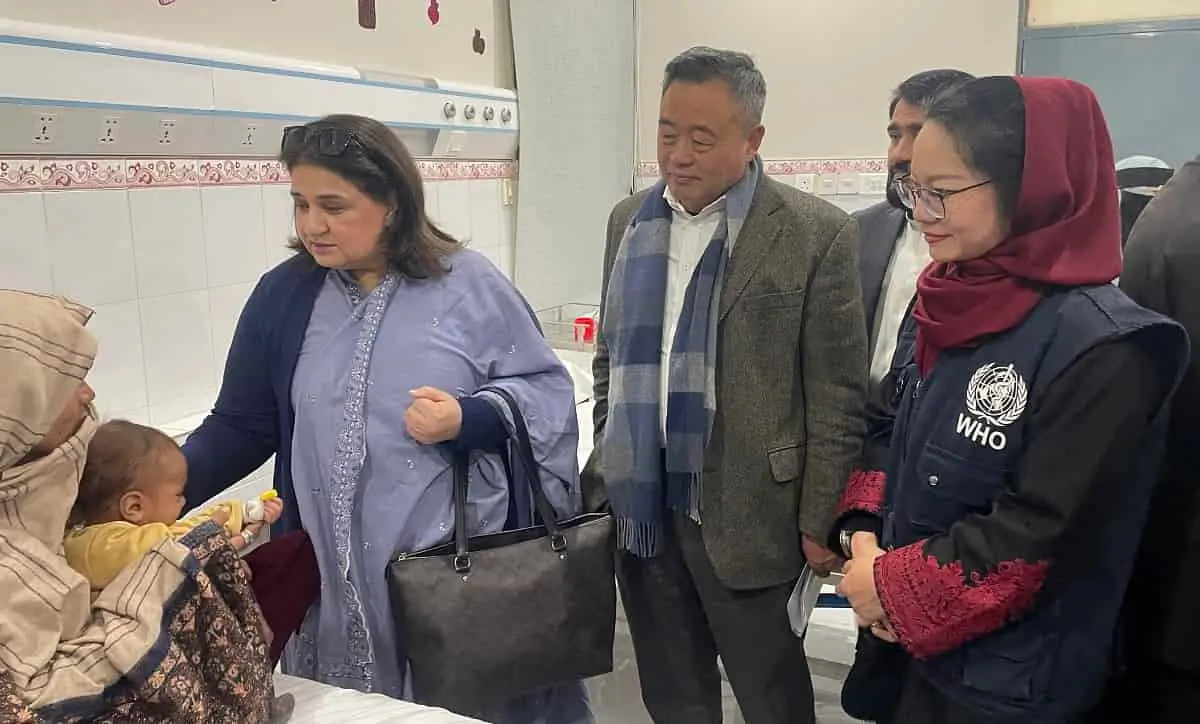
In a major step to combat one of the world’s most severe child malnutrition crises, the World Health Organization (WHO) has partnered with Pakistan’s Benazir Income Support Programme (BISP) to establish 40 new nutrition stabilization centres since November 2025. These facilities deliver critical, life-saving treatment to children under five facing severe acute malnutrition with medical complications, bringing the total WHO-supported centres nationwide to 169.
The expanded network, staffed by approximately 700 trained personnel, now reaches more than 70,000 children annually while offering vital nutrition counselling to around 120,000 mothers and caregivers. The 40 new centres alone are projected to treat an estimated 15,000 severely malnourished children each year.
A key highlight came this week with the inauguration of one such centre at Bacha Khan Medical Complex in Swabi, Khyber Pakhtunkhwa province. The event was led by BISP Chairperson Senator Rubina Khalid, WHO Representative in Pakistan Dr Luo Dapeng, and Khyber Pakhtunkhwa Health Minister Khaleeq Ur Rehman.
Senator Rubina Khalid praised the collaboration, stating: “BISP’s Benazir Nashonuma Programme is an important and effective initiative for promoting the health and nutrition of mothers and children. These nutrition stabilization centres, established in partnership with WHO, provide life-saving treatment and will be expanded to more areas across Pakistan in phases, with the cooperation of provincial governments.”
WHO’s support has encompassed repairs and renovations, staff capacity building, human resource deployment, supply provision—including therapeutic foods—and ongoing technical guidance. The centres boast an impressive 97% cure rate for treated children, demonstrating the effectiveness of this science-based, integrated approach.
Dr Luo Dapeng emphasized the human impact: “We are particularly thankful for and proud of this collaboration because we are saving thousands of lives, managing the most challenging cases of malnutrition with medical complications using a science-based approach. Without the treatment provided in the stabilization centres, these children would unfortunately die. Even a single child dying from malnutrition is already one too many.”
He reaffirmed WHO’s commitment: “WHO stands with Pakistan to continue saving the lives of children and securing a healthier future for all without distinction, no matter their economic status, where they live, or who they are.”
Pakistan continues to rank among the top 10 countries globally for child malnutrition burden. Approximately 40% of children under five—around 10 million—are affected by stunting, while 17.7% (about 5 million) suffer from wasting. Severe acute malnutrition contributes to substantial economic losses, estimated at USD 17 billion annually, alongside long-term developmental consequences.
Despite these persistent challenges, the Benazir Nashonuma Programme—implemented under BISP with technical backing from WHO, WFP, UNICEF, and other partners—has delivered some of the most impressive results ever recorded for large-scale nutrition interventions worldwide.
Midline evaluations from late 2025 highlight breakthrough outcomes: a 20% reduction in stunting among children by six months of age, a 5.6 percentage-point drop in low birth weight among beneficiaries, and notable improvements in early breastfeeding initiation and child survival rates. These gains position Nashonuma as a model for addressing the critical first 1,000 days of life.
WHO has pledged continued partnership with Pakistan to strengthen this and related health initiatives, aiming for equitable access to nutrition and healthcare services nationwide. As provincial governments collaborate on phased expansions, the programme represents a beacon of hope in reducing child mortality and building long-term resilience against malnutrition.
For families in vulnerable communities, these centres mean the difference between life and death. With sustained international and domestic support, Pakistan is making tangible progress toward a healthier generation of children.