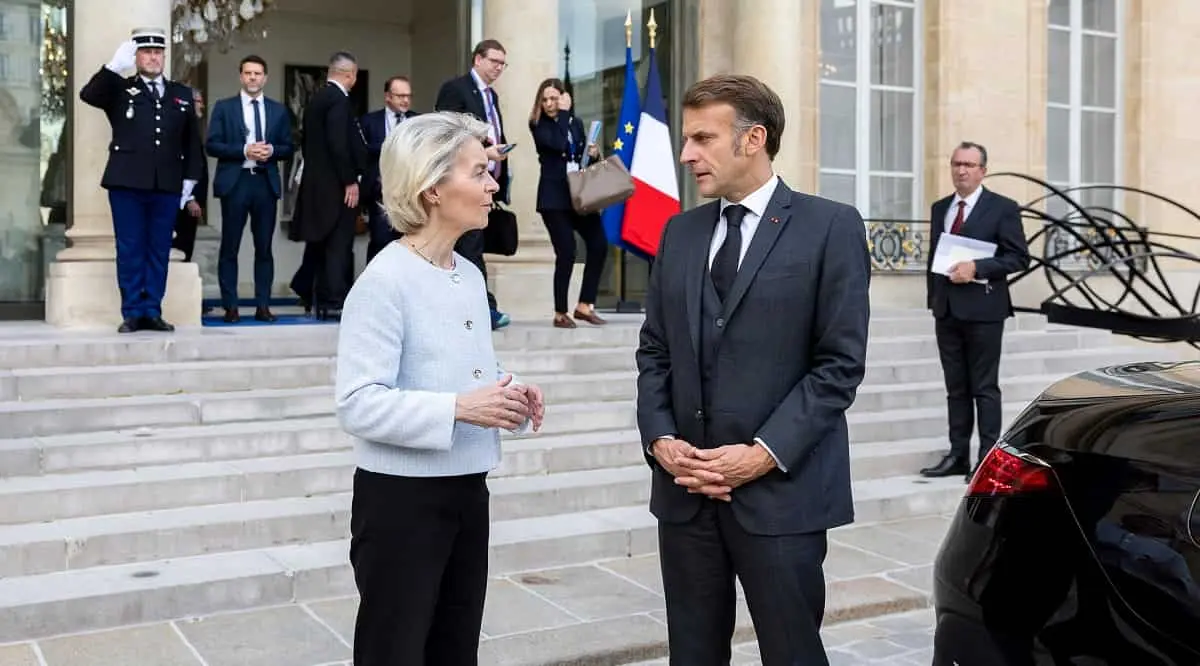
While France led the backlash, the room was far from unanimous—exposing deep fractures within the EU.
Countries Supporting or Engaging the Board:
-
Viktor Orbán (Hungary) – permanent participation
-
Bulgaria – permanent participation
-
Observer interest from Italy, Poland, Greece, Slovakia, Czech Republic, Cyprus, Romania
This split reflects broader East–West tensions within the EU, particularly over:
-
Relations with Washington
-
Commitment to multilateral institutions
-
Willingness to challenge US-led initiatives
Why France Sees an Existential Threat to Multilateralism
France has historically positioned itself as:
-
A defender of the UN-centered international order
-
A proponent of EU strategic autonomy
-
A skeptic of unilateral US power structures
From Paris’s perspective, Trump’s Board of Peace risks:
-
Normalizing parallel peace diplomacy
-
Weakening the authority of the United Nations Security Council
-
Replacing international law with ad hoc coalitions
Allowing EU officials to attend—even informally—accelerates this erosion.
Gaza, Aid, and the Fear of Marginalization
Despite strong objections, Brussels faces a dilemma.
The EU is:
-
The largest humanitarian donor to Palestinians
-
Contributor of €1.65 billion since October 7, 2023
-
A key funder of Gaza’s civilian infrastructure
European officials fear that boycotting the Board of Peace entirely could:
-
Sideline the EU from Gaza reconstruction
-
Reduce leverage over post-war governance
-
Allow Washington to dominate the peace narrative
This tension explains why the Commission chose engagement—while France insists the cost to EU credibility is too high.
The Nickolay Mladenov Factor: Institutional Overlap Ahead
Nickolay Mladenov**, appointed by Trump as High Representative for Gaza, is set to brief EU foreign ministers next week. His role is to link the Board of Peace with a technocratic Palestinian committee running Gaza’s daily affairs.
For critics, this raises fresh alarm:
-
Is the Board quietly embedding itself into governance structures?
-
Will EU funds end up supporting a US-designed framework?
-
Does this marginalize Palestinian political agency?
What’s at Stake for Europe?
Institutional Credibility
If commissioners act without mandate, EU foreign policy coherence collapses.
UN Charter Integrity
All 27 EU states are signatories. Endorsing parallel structures weakens the legal order they claim to defend.
EU Strategic Autonomy
France fears Europe drifting into policy dependency on Washington.
Global Signal
If the EU bends here, future conflicts—from Ukraine to Taiwan—could bypass multilateral institutions entirely.
A Trip That Triggered a Reckoning
France’s leadership in opposing Dubravka Šuica’s Board of Peace trip is not about diplomatic protocol—it is about the soul of European foreign policy.
At stake is whether the EU:
-
Upholds treaty-based multilateralism
-
Defends the UN system
-
Or quietly adapts to a world where peace is brokered by power, not law
As foreign ministers meet in Brussels next week, the debate will define Europe’s role in a rapidly fragmenting global order—and whether it chooses principled resistance or pragmatic accommodation.