Nearly all UNSC members—minus the US—recently joined Palestine’s UN ambassador Riyad Mansour in condemning Israel’s latest actions in the occupied West Bank. The statement, backed by 80 countries, reaffirmed strong opposition to annexation.
Yet Israel has moved ahead regardless.
On February 8, Israel’s security cabinet approved measures facilitating land seizure and direct property purchases by Israelis in the West Bank. Energy Minister Eli Cohen openly described the policy as “de facto sovereignty.” Far-right Finance Minister Bezalel Smotrich went further, vowing to “encourage” Palestinian emigration.
Despite overwhelming international opposition:
-
No binding UNSC resolution followed
-
No sanctions were imposed
-
No accountability mechanisms were triggered
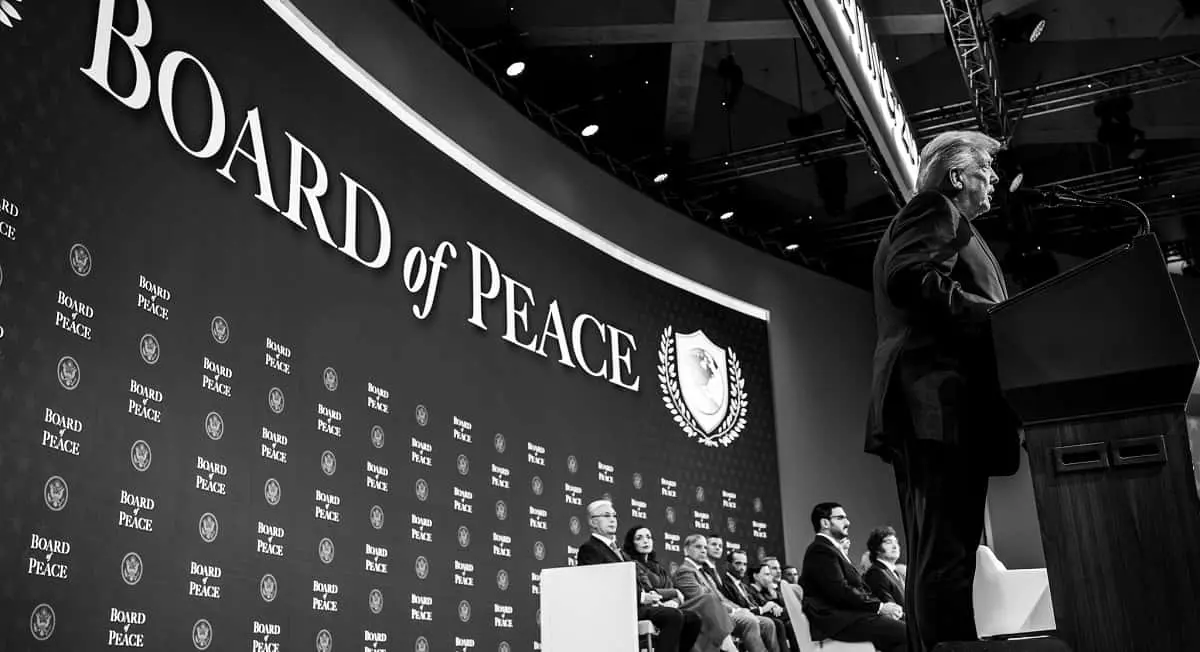
This vacuum is precisely where Trump’s Board of Peace steps in—not to stop annexation, but to redefine peace on terms acceptable to Israel and Washington.
How the Board of Peace Undermines the UNSC: Key Mechanisms
Agenda Displacement
By convening high-profile meetings with key regional players (UK, Israel, Jordan, Egypt, Indonesia), the Board competes directly with the UNSC for diplomatic attention.
Financial Leverage Over Legal Authority
The UNSC relies on compliance; the Board relies on money and security guarantees. In a fractured world, states often choose funding over norms.
Selective Multilateralism
Unlike the UNSC’s universal framework, the Board invites only politically aligned actors—turning peace into an exclusive club.
Normalization of Bypassing the UN
If Gaza reconstruction, policing, and security are handled outside the UN system, future conflicts—from Ukraine to Taiwan—may follow the same model.
The “Imperial Agenda” Accusation: Is It Justified?
Critics argue Trump’s initiative reflects an imperial logic:
-
The US defines peace
-
Allies enforce it
-
The UN merely observes
Trump’s vision of influence “far beyond Gaza” suggests the Board could become a standing global crisis manager, effectively replacing the UNSC’s role without its checks and balances.
This aligns with long-standing US skepticism toward multilateral constraints—now formalized into an alternative structure.
The Global South’s Dilemma
Many Arab, Islamic, and Global South countries face a painful choice:
-
Engage with the UNSC, where moral victories are frequent but enforcement is rare
-
Or engage with the Board of Peace, where outcomes may come at the cost of Palestinian self-determination
Indonesia’s willingness to prepare up to 8,000 troops for a potential Gaza deployment illustrates this tension. Participation may stabilize Gaza—but under whose political framework?
Long-Term Implications: A Hollowed-Out Security Council?
If Trump’s model succeeds, the UNSC risks becoming:
-
A symbolic debating chamber
-
A forum for statements without consequences
-
A relic of post-1945 internationalism
In this scenario, real power shifts to ad hoc coalitions led by great powers, accelerating the fragmentation of global governance.
Peace Without Law Is Not Peace
The clash between the UNSC and Trump’s Board of Peace is not about scheduling—it is about who gets to define peace in the 21st century.
If peace becomes a product of unilateral boards rather than collective law, the UNSC will not be formally dismantled—but functionally replaced.
As Riyad Mansour warned, the international community must stop illegal annexation “whether in Washington or in New York.” The question is whether the world still believes that peace without justice—and without the UN—can ever be sustainable.