Home Latest Israel, Gaza, and the Clash of World Orders: Why the UN Condemns...

Israel, Gaza, and the Clash of World Orders: Why the UN Condemns What Trump’s Board Won’t

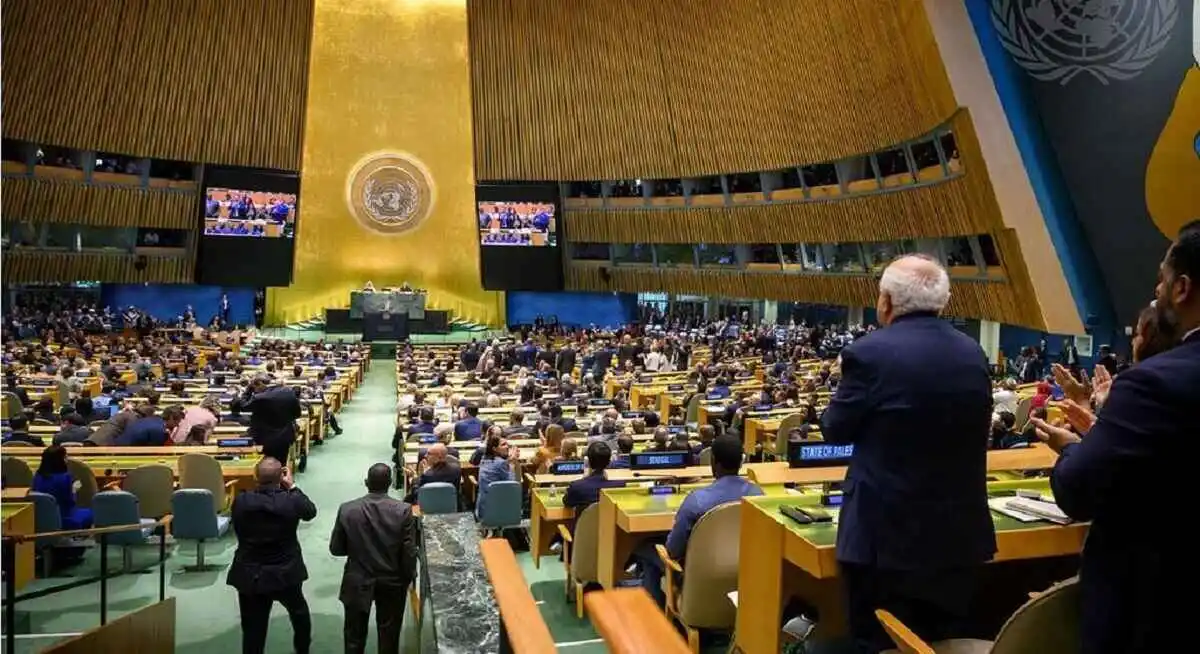
UNGA80 - Climate vs. Conflict 47 Leaders Cry Crisis, But Wars Steal the Show Photo-UN-Loey-Felipe

As the humanitarian catastrophe in Gaza deepens and Israel accelerates controversial actions in the occupied West Bank, an uncomfortable diplomatic contrast has emerged. On one side stands the United Nations Security Council (UNSC), increasingly vocal in condemning Israel’s ceasefire violations, annexation moves, and humanitarian restrictions. On the other side is **Donald Trump’s self-styled Board of Peace, conspicuously silent on Israel’s repeated breaches of the Gaza “ceasefire”.

This divergence is not accidental. It reflects a deeper struggle over global governance, agenda-setting, and power—one in which Israel’s diplomatic dominance within Trump’s Board of Peace (BoP) collides directly with the multilateral authority of the UNSC.

What Is Trump’s Board of Peace—and Why Does It Matter?

Trump’s Board of Peace is an unprecedented initiative: an informal, US-led diplomatic body chaired indefinitely by Trump himself. Framed as a mechanism to “bring peace and security far beyond Gaza,” the BoP is designed to operate parallel to—rather than within—the UN framework.

Unlike the UNSC, the Board:

  • Has no binding legal authority

  • Is not accountable to international law

  • Reflects US strategic priorities, not multilateral consensus

Critics argue that the BoP’s real purpose is to sideline the United Nations, particularly when UN processes produce outcomes inconvenient for Washington or Tel Aviv.

The timing alone is revealing: a special UNSC meeting on Israel-Palestine was rescheduled specifically to avoid clashing with the BoP’s inaugural session in Washington—an extraordinary accommodation that highlights the growing tension between the two bodies.

Silence on Gaza: Why the Board of Peace Avoids Israel’s Ceasefire Violations

Structural Bias Toward Israel

At the core of the BoP’s silence lies its political DNA. The board is deeply aligned with Israeli security narratives and US strategic interests in the Middle East. Israel is framed not as a party obligated under international humanitarian law, but as a strategic ally whose actions are pre-emptively legitimized.

This explains why:

  • Over 600 Palestinians have reportedly been killed since the US-brokered Gaza ceasefire began

  • Israel continues to restrict humanitarian aid

  • Yet the BoP remains focused on Hamas disarmament and “security stabilization”

Ceasefire violations by Israel are treated as operational necessities, not breaches requiring accountability.

Trump’s Personal Diplomacy and Israel

Trump’s political legacy is inseparable from policies that favored Israel:

  • Recognition of Jerusalem as Israel’s capital

  • Support for West Bank settlement expansion

  • Marginalization of Palestinian diplomatic representation

The Board of Peace reflects this worldview. Any criticism of Israel would undermine the BoP’s credibility among its core backers—making silence the safer political option.


UNSC Pushback: Why the UN Is Slamming Israel

In stark contrast, the UNSC has intensified scrutiny of Israel’s actions.

Pakistan’s Intervention and a Broader Diplomatic Shift

During the UNSC session, Pakistan’s Deputy Prime Minister Muhammad Ishaq Dar delivered one of the most direct critiques yet, warning that Israel’s:

  • Continued ceasefire violations

  • De facto annexation of West Bank land

  • Illegal actions across occupied Palestinian territories

are actively undermining diplomatic efforts for lasting peace.

Dar’s remarks echoed a growing consensus among UN members that Israel’s policies are not defensive—but expansionist.

Annexation and International Law

On February 8, Israel’s security cabinet approved measures allowing:

  • Easier seizure of Palestinian land

  • Direct purchase of West Bank property by Israelis

  • Expanded military control over territory home to 3.4 million Palestinians

Israeli Energy Minister Eli Cohen openly described these steps as “de facto sovereignty,” while Finance Minister Bezalel Smotrich pledged to encourage Palestinian “emigration.”

For the UNSC, these moves constitute:

  • Violations of the Fourth Geneva Convention

  • A direct assault on the two-state solution

  • A precedent-setting challenge to international law

Israel’s Dominance on the Board of Peace

Israel’s influence within the BoP is neither subtle nor incidental.

Agenda Control

The BoP’s priorities—security forces, Hamas disarmament, technocratic governance—mirror Israeli demands while sidelining:

  • Accountability for civilian casualties

  • Legal scrutiny of occupation

  • Palestinian self-determination

Financial and Military Framing

Trump’s announcement of $5 billion pledged for Gaza reconstruction, alongside plans for international security deployments (including up to 8,000 Indonesian troops), shifts focus away from why Gaza was destroyed to how to stabilize it without challenging Israel.

Reconstruction becomes a substitute for justice.

UNSC vs Board of Peace: A Clash of Global Orders

This is not merely a policy disagreement—it is a structural confrontation.

UNSC Board of Peace
Multilateral US-centric
Rooted in international law Rooted in political discretion
Seeks accountability Seeks manageability
Includes Global South voices Dominated by Western allies

Palestine’s UN ambassador Riyad Mansour, speaking on behalf of 80 countries, made the stakes clear: the international community must stop Israel’s illegal annexation—whether in Washington or New York.

Why Arab and Muslim Countries Reject the BoP’s Silence

Many Arab and Muslim-majority states demanded that the UNSC address Israel’s ceasefire violations before the BoP meeting. Their concern is that:

  • The BoP normalizes Israeli actions

  • The UN is being deliberately bypassed

  • A precedent is being set where power overrides law

For these states, silence equals complicity.

Imperial Agenda or Peace Mechanism?

Trump’s assertion that the Board of Peace will wield influence “far beyond Gaza” has raised alarms among diplomats who see it as an imperial parallel system—one that enshrines US and Israeli priorities while weakening international institutions.

If left unchecked, the BoP risks:

  • Undermining the authority of the UNSC

  • Normalizing annexation and occupation

  • Redefining peace as the absence of resistance, not the presence of justice

Silence That Speaks Volumes

The silence of Trump’s Board of Peace on Israel’s Gaza ceasefire violations is not a diplomatic oversight—it is a political statement. It reveals a power structure where Israel enjoys near-total immunity, while the UNSC struggles to enforce the very laws it was created to uphold.

As the UNSC continues to slam Israel for violations of international law, the clash between multilateralism and unilateral power is becoming impossible to ignore. The future of Gaza—and the credibility of global governance—may depend on which vision ultimately prevails.

Peace without accountability is not peace. And silence, in this context, is taking sides.

Exit mobile version