
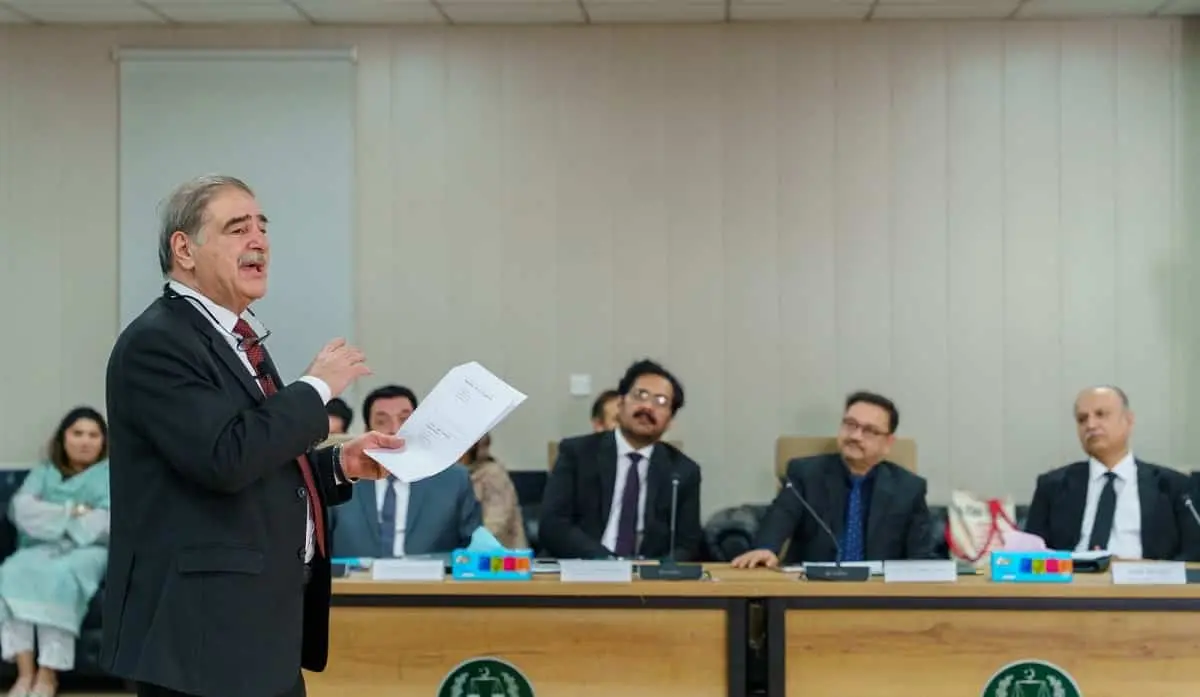
Pakistan’s justice sector is entering a new era of transformation, driven by collaboration, innovation, and a shared commitment to excellence. At the center of this progress stands the Federal Judicial Academy (FJA), which recently hosted the second annual National Judicial Educators Conference in Islamabad — a milestone event focused on modernizing judicial education nationwide.
Backed by the European Union and organized in partnership with the United Nations Development Programme (UNDP) under the Deliver Justice Project, the conference gathered 45 judicial educators from across Pakistan. The two-day event marked a decisive step toward implementing the Islamabad Declaration on the Future of Judicial Excellence.
Accelerating the Islamabad Declaration on Judicial Excellence
Adopted unanimously at last year’s conference, the Islamabad Declaration outlines a shared national vision to:
-
Strengthen judicial education standards
-
Develop a unified National Judicial Education Framework
-
Establish a National Judicial Educators Forum
-
Promote collaboration and continuous professional development
This year’s conference focused on turning that vision into measurable action.
Participants engaged in structured dialogue and collaborative exercises aimed at enhancing curriculum design, improving pedagogical methods, and aligning judicial training with the evolving needs of communities. The emphasis was clear: a modern judiciary must be responsive, inclusive, and equipped with contemporary legal knowledge and best practices.
Building a Unified Judicial Training Framework in Pakistan
In his closing remarks, Director General of the Federal Judicial Academy, Hayat Ali Shah, underscored the importance of collaboration and knowledge exchange in strengthening judicial institutions.
He emphasized that the action plans developed during the conference would play a pivotal role in creating a unified national curriculum. The proposed National Judicial Educators Forum is expected to sustain momentum, promote institutional learning, and ensure consistent standards across federal and provincial academies.
This strategic alignment marks a significant shift from fragmented training systems toward a cohesive and standardized approach to judicial capacity building.
Why Judicial Academies Matter for Rule of Law
Speaking at the event, Ms. ?na Kelly, First Secretary for Rule of Law at the European Union Delegation to Pakistan, highlighted the critical role judicial academies play in maintaining a stable and informed judiciary.
Judicial academies serve as the backbone of legal capacity building. By equipping judges and court staff with updated procedural knowledge, case management skills, and exposure to best practices, these institutions directly influence the efficiency and credibility of the justice system.
The European Union’s continued support demonstrates long-term international commitment to strengthening Pakistan’s rule of law institutions.
UNDP’s Deliver Justice Project: Advancing People-Centered Justice
Through its Rule of Law Programme, the United Nations Development Programme has been instrumental in enhancing the institutional capacity of judicial academies across Pakistan.
Shahzada Ahmad, Programme Manager at UNDP Pakistan, noted that the successful implementation of the Islamabad Declaration will further accelerate a transformation centered on accessible and people-focused justice.
The Deliver Justice Project reflects a broader global trend: justice systems must evolve to meet contemporary societal expectations, improve public trust, and deliver timely outcomes.
A Comprehensive Action Plan for Judicial Reform
The conference concluded with the development of a comprehensive action plan aimed at:
-
Modernizing judicial training methodologies
-
Strengthening collaboration between federal and provincial academies
-
Standardizing curriculum frameworks
-
Promoting inclusive and quality-focused education
-
Ensuring long-term sustainability of judicial reforms
This roadmap signals a shift from dialogue to execution — ensuring that judicial excellence becomes institutionalized rather than aspirational.
The Future of Judicial Education in Pakistan
As Pakistan continues its journey toward judicial reform, initiatives like the National Judicial Educators Conference are shaping a stronger, more responsive justice system.
With sustained collaboration between the Federal Judicial Academy, the European Union, and the United Nations Development Programme, the foundations are being laid for:
-
Improved judicial competence
-
Enhanced institutional coordination
-
Greater public confidence in the justice system
-
A future-ready judiciary aligned with global best practices
Judicial excellence is no longer just a declaration — it is becoming a structured, actionable framework guiding the evolution of Pakistan’s justice sector.