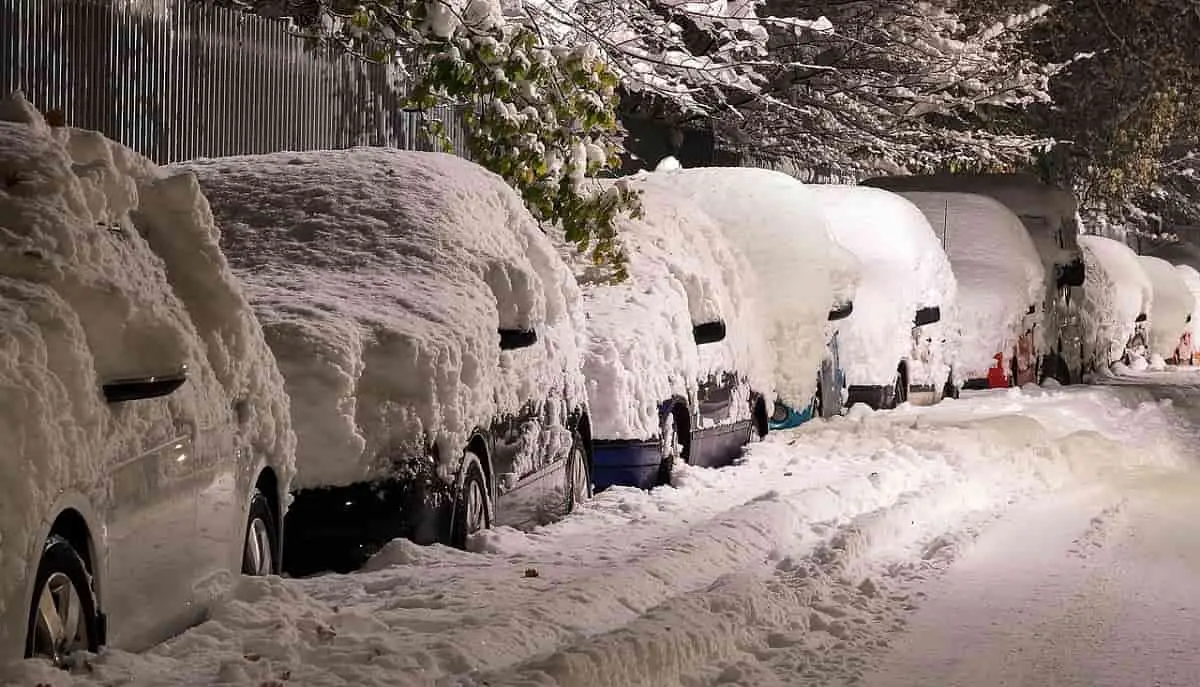
A powerful winter storm — officially classified by meteorologists as a bomb cyclone nor’easter — has slammed the US East Coast with up to 32 inches of snow, crippling infrastructure from the Mid-Atlantic to New England and leaving more than 600,000 homes and businesses without power. The storm has triggered states of emergency, paralyzed travel networks, and reiterated concerns about the impacts of extreme weather in a changing climate.
Historic Snowfall and Widespread Disruptions
Cities and towns from Rhode Island to New York and Massachusetts have seen extraordinary snowfall totals, with some reporting snow depths exceeding two and a half feet in just 24–48 hours. Providence, Rhode Island, recorded over 32 inches, making it one of the snowiest two-day periods in the city’s history.
The sheer weight of this heavy, wet snow — combined with hurricane-force wind gusts — has brought down trees and snapped power lines, overwhelming utility systems already strained by past storms. PowerOutage tracking data show widespread outages concentrated in Massachusetts, New Jersey, and Delaware, collectively accounting for tens of thousands of customers without power.
In addition to electricity disruptions, more than 10,000 flights were canceled, major highways were temporarily closed, and public transit was shut down in key urban centers including New York and Boston as officials urged residents to stay off the roads.
What Is a Bomb Cyclone — and Why It Matters
The storm system rapidly intensified off the Atlantic Coast through a process known as cyclogenesis. In meteorological terms, when the atmospheric pressure drops by at least 24 millibars in 24 hours, a “bomb cyclone” forms — a sign of unusually deep and powerful low-pressure systems. These systems draw warm, moist air from the ocean into clashes with cold Arctic air sweeping south, fueling heavy precipitation and extreme winds.
A nor’easter — the coastal cyclone form common to the Atlantic seaboard — can produce blizzard conditions with white-out snow, severe coastal flooding, and hurricane-force wind gusts, posing multiple hazards at once. The current storm illustrates how such systems can develop with exceptional intensity even in late winter.
Climate Change and Extreme Snowstorms: The Scientific Context
Heavy snowstorms like this one do not contradict climate change science; in fact, they align with what scientists expect under a warming global climate:
More Moisture, More Snow
A warmer atmosphere holds more moisture. According to established meteorological principles and climate model projections, this can result in heavier precipitation events — including snow — when cold air is in place. As long as temperatures remain near or below freezing, higher atmospheric moisture can produce greater snowfall totals.
This dynamic has been documented in recent decades, with some of the strongest nor’easters and snow events showing increasing intensity compared with several decades ago. Studies also show that extremes in precipitation (both rain and snow) are a hallmark of a warming climate.
Arctic Amplification and Jet Stream Patterns
Climate scientists point to Arctic warming — outpacing global averages — as a factor that can weaken the jet stream and create more persistent dips that allow frigid air to plunge deep into the United States. This phenomenon can contribute to extreme winter weather when combined with abundant moisture. While research continues on the strength of this connection, multiple peer-reviewed studies support increased volatility in winter storm patterns as a response to global warming.
Aging Infrastructure: Why Power Grids Fail
While climate change can make storms more intense, the widespread power outages also highlight vulnerabilities in the US electrical grid:
-
Many parts of the grid remain reliant on overhead transmission lines that are susceptible to tree falls and wind damage.
-
Extreme weather events compound stress on aging infrastructure, increasing the likelihood of cascading outages.
-
Heat- and cold-related weather risks are emerging as key drivers of grid vulnerability in federal and academic risk assessments.
Research also highlights that power restoration and grid resilience currently vary widely across states and regions, often reflecting differences in investment and planning for extreme weather events.
Comparing Storms: Is This Snowstorm Record-Setting?
Although the current snowfall totals are remarkable, they are part of a pattern of powerful East Coast winter storms:
-
The 2013 nor’easter brought up to 36 inches of snow with widespread outages, but fewer than current outages.
-
The 2014 nor’easter caused more than 1.2 million power outages with heavy snow and ice.
-
In 2018, another nor’easter triggered nearly 2 million outages across the Northeast.
In comparison, the 600,000+ outages seen in this storm reflect both the storm’s strength and the grid’s vulnerability under extreme conditions.
Long-Term Impacts and Emergency Responses
Emergency declarations have been issued in cities from New York to Boston, and multiple states have imposed travel bans as crews work to clear highways and restore services. Snow removal teams are overwhelmed, and utility workers are facing dangerous conditions as they attempt to repair blown transformers and downed lines.
Power outages in winter are particularly dangerous because loss of heating can expose vulnerable populations — including the elderly and those without alternate heat sources — to life-threatening cold. Authorities have opened warming centers where feasible and urged people without power to seek shelter.
What This Means for the Future
Infrastructure Upgrades Are Urgent
Experts increasingly argue that climate adaptation must include grid modernization, burying lines where feasible, upgrading transmission infrastructure, and improving emergency response capabilities. This could reduce outage frequency and duration during extreme weather events.
Climate Resilience Planning
Incorporating climate projections into infrastructure and community planning — including stormwater drainage, power resilience, and emergency shelters — will be critical as extreme weather events become more frequent and severe under warming scenarios.
Individual Preparedness
Households in storm-prone regions may need to invest in backup power, insulation upgrades, and emergency kits to withstand future power disruptions.
The recent East Coast storm — one of the season’s most intense — has underscored the intersection of climate dynamics, aging infrastructure, and extreme weather impacts. While no single event alone proves climate change, the intensification of heavy snowstorms and their cascading effects on power grids point to a future in which resilient planning and climate-informed infrastructure are no longer optional — they are vital.