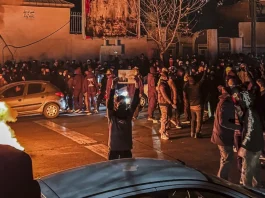

In the high-stakes arena of international relations, the second Trump administration has reignited tensions with Iran through economic measures rather than direct confrontation. Recently, the U.S. president announced a 25% tariff on any nation conducting business with the Islamic Republic, a move framed as a response to ongoing anti-regime protests and reported civilian casualties. This decision raises a pivotal question: Why impose tariffs on countries like China and India—instead of opting for military strikes?
Escalating Tensions and the Tariff Announcement
The tariffs, declared effective immediately, target “any and all business” with Iran, aiming to isolate Tehran economically. This follows warnings from the White House that military intervention could occur if Iranian authorities continue their crackdown on protesters, with reports indicating hundreds of deaths amid widespread unrest over economic hardships and governance issues. Protests have intensified, drawing parallels to past uprisings, and the U.S. has positioned the tariffs as a tool to pressure the regime without immediate boots on the ground.
Historically, U.S.-Iran relations have been fraught since the 1979 revolution, escalating under Trump’s first term with the withdrawal from the 2015 nuclear deal (JCPOA), assassination of General Qasem Soleimani in 2020, and “maximum pressure” sanctions. In 2026, amid renewed protests triggered by economic woes like spiraling inflation and failed subsidy programs, Trump has echoed past rhetoric but pivoted to tariffs as the initial response.
Key Reasons for Choosing Tariffs Over Military Strikes
Several strategic, political, and practical factors explain the preference for economic tools:
- Economic Leverage as a Low-Risk Alternative: Tariffs allow the U.S. to exert pressure indirectly by targeting Iran’s trading partners, disrupting its oil exports and revenue streams without the immediate dangers of military engagement. Military strikes could lead to retaliation, regional instability, or even a broader conflict involving proxies like Hezbollah or Houthi rebels. Tariffs, by contrast, are reversible and can be calibrated, serving as a “warning shot” to encourage negotiations—Tehran has reportedly signaled interest in talks.
- Domestic Political Appeal and “America First” Agenda: Trump’s base responds positively to tariffs, viewing them as protecting U.S. jobs and countering unfair trade. In his second term, tariffs have been positioned as a substitute for taxes and a means to promote domestic manufacturing. A military strike might alienate isolationist supporters wary of endless wars, especially after recent U.S. involvements in Ukraine and the Middle East. Tariffs align with Trump’s history of using trade as a foreign policy weapon, as seen in past levies on Chinese goods and Indian products tied to Russian oil purchases.
- Avoiding Escalation and International Backlash: Strikes could violate international norms, provoke allies, and spike global oil prices—potentially harming the U.S. economy. Tariffs, while disruptive, can be justified under national security laws (e.g., the 1977 International Emergency Economic Powers Act), allowing Trump to claim emergency authority amid protests. This approach also tests the waters: If tariffs fail to curb Iran’s actions, military options like airstrikes or cyber attacks remain on the table.
- Humanitarian and Diplomatic Framing: The tariffs are tied to humanitarian concerns over protester deaths, positioning the U.S. as a defender of rights without direct intervention. This echoes Trump’s Venezuela strategy, combining sanctions with limited force, and aims to rally international support against Tehran.
Impacts on Affected Countries and Global Trade
The tariffs disproportionately hit Iran’s top partners:
- China and India: As major importers of Iranian oil, these nations face higher costs on U.S.-bound goods, potentially exacerbating U.S.-China trade wars and straining U.S.-India ties. China, already under U.S. scrutiny, might retaliate, while India could seek waivers or diversify energy sources.
- Other Nations: Countries like Turkey, South Korea, and European states with residual trade could see economic ripple effects, including higher energy prices and supply chain disruptions.
Broader implications include potential WTO challenges, elevated global inflation, and shifts in alliances—pushing nations toward alternatives like Russia’s energy markets. Economically, while tariffs might raise short-term U.S. revenue, studies suggest they could net far less after accounting for retaliatory measures and growth slowdowns.
Broader Geopolitical Angles and Potential Outcomes
From a multipolar lens, this move underscores Trump’s preference for unilateralism, potentially isolating the U.S. if allies balk. Iran has responded with defiance, exchanging threats on social media, but internal unrest might force concessions. Experts warn of escalation risks, including proxy conflicts or nuclear program advancements, but tariffs buy time for diplomacy.
If effective, this could lead to regime weakening or talks; if not, military options loom, as hinted in White House statements.
A Calculated Gamble in Uncertain Times
Trump’s tariff strategy on Iran’s trade partners reflects a deliberate shift toward economic warfare over kinetic action, balancing aggression with caution in a volatile 2026 landscape. By targeting intermediaries, the U.S. aims to starve the regime of funds while minimizing direct risks, though this risks alienating partners and inflating global costs. As protests persist and responses unfold, this approach tests the limits of “maximum pressure” in shaping Middle East dynamics.