In a landmark move, the European Union and the Mercosur bloc—comprising Argentina, Brazil, Paraguay, and Uruguay—signed a comprehensive free trade agreement after more than 25 years of arduous negotiations. This deal creates one of the world’s largest free trade zones, encompassing over 700 million consumers and roughly 30% of global GDP. From a European standpoint, the timing could not be more strategic: as U.S. President Donald Trump escalates protectionist threats—including new tariffs on European nations opposing American ambitions in Greenland—the EU is actively charting a path toward greater trade independence and multilateral resilience.
Ending a Quarter-Century Saga: The Deal’s Core Elements
The agreement, finalized in Asunción, Paraguay, eliminates tariffs on more than 90% of bilateral trade, with some phased reductions over 10–15 years to protect sensitive sectors. European exporters stand to gain significantly: easier access for cars, wine, cheese, and industrial goods to a vast South American market rich in agricultural and mineral resources. In return, Mercosur countries secure improved entry for key exports like beef, poultry, sugar, rice, honey, and soybeans—subject to quotas and safeguards to mitigate market disruptions in Europe.
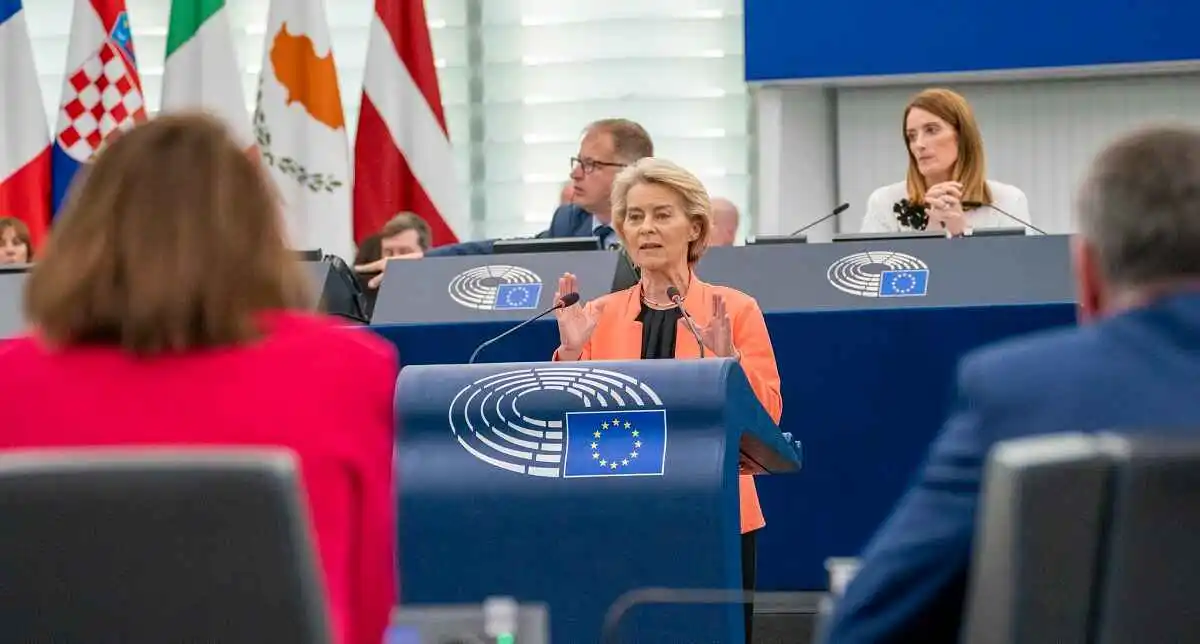
European Commission President Ursula von der Leyen hailed the pact as a deliberate choice for “fair trade over tariffs” and “productive long-term partnership over isolation.” Paraguayan President Santiago Peña emphasized it as a “clear signal in favour of international trade” amid global tensions, while Brazilian Foreign Minister Mauro Vieira described it as a “bulwark” against “unpredictability, protectionism, and coercion”—a thinly veiled reference to current U.S. policies.
This breakthrough follows a qualified majority approval by EU member states earlier in January, despite opposition from countries like France, Ireland, Austria, Hungary, and Poland, where agricultural lobbies voiced strong concerns.
Geopolitical Context: Countering U.S. Protectionism
The signing coincides directly with heightened transatlantic friction. Trump’s administration has announced 10% tariffs on goods from eight European countries in retaliation for their resistance to U.S. efforts to gain control over Greenland, refusing to rule out further escalation or even military options. This aggressive stance has amplified calls in Europe for strategic autonomy.
The EU-Mercosur deal serves as a powerful counter-narrative. By deepening ties with Latin America, the EU diversifies away from over-reliance on the U.S. market and hedges against Beijing’s growing influence in the region. Analysts view it as a geopolitical victory: expanding European access to resource-rich South America while sending a message that multilateralism endures despite rising isolationism. European leaders, including European Council President Antonio Costa, have advocated for more zones of economic integration to offset tariff disruptions.
In this light, the pact not only boosts trade but reinforces the EU’s commitment to rules-based global commerce at a moment when unilateral threats dominate headlines.
Winners, Losers, and Lingering Controversies
Economic Winners:
- European industries, particularly German automakers (Volkswagen, BMW), gain preferential access to growing Latin American markets.
- South American producers benefit from lower barriers to the affluent EU consumer base.
- Overall, the deal promises job creation, lower consumer prices, and billions in saved customs duties for EU firms.
Challenges and Opposition:
- European farmers, especially in France and Ireland, fear a flood of cheaper South American imports. Thousands protested in Ireland, accusing leaders of betraying agricultural interests.
- Environmental groups warn of potential deforestation spikes in the Amazon due to increased soy and beef demand, though the agreement includes environmental provisions and safeguards.
- Ratification remains uncertain: the deal requires approval from the European Parliament (where debates promise to be heated) and Mercosur national legislatures.
Despite these hurdles, supporters argue that quotas on sensitive products like beef, plus safeguard clauses, adequately protect vulnerable sectors.
Broader Implications for Europe’s Trade Future
As Trump’s erratic tariffs continue to unsettle markets and alliances, the EU-Mercosur agreement exemplifies proactive diversification. It complements recent moves—like Canada’s pivot toward Chinese EV markets—and positions Europe to thrive in a multipolar world. With potential entry for Bolivia and safeguards against disruption, the pact could evolve into an even larger framework.
For European businesses and consumers, this means more choices, competitive pricing, and reduced vulnerability to transatlantic volatility. Politically, it reaffirms the bloc’s ability to negotiate constructively while defending open markets.