

In a region long plagued by conflict, the Gaza Peace Deal signed on October 13, 2025, represents a pivotal moment. Brokered with significant involvement from global leaders, this agreement aims to halt hostilities between Israel and Hamas, paving the way for reconstruction and stability. As tensions in the Middle East continue to simmer, many wonder if this deal truly offers the final opportunity for lasting peace or if it’s merely a temporary pause in an enduring cycle of violence.
Terms of the Gaza Peace deal & How Difficult Are They?
The Gaza Peace Agreement, often referred to as Trump’s 20-point plan, outlines a comprehensive framework to end the war that began with the October 7, 2023, attack. The deal includes an immediate and permanent ceasefire, with all military operations suspended and frontlines frozen. Within 72 hours of acceptance, all living hostages are to be released, along with the remains of those deceased, in exchange for Israel freeing approximately 2,000 Palestinian prisoners, including 250 serving life sentences and 1,700 others. Humanitarian aid ramps up significantly, with 600 trucks entering Gaza daily, coordinated by international bodies like the United Nations and Red Crescent, focusing on food, fuel, water, electricity, and reconstruction equipment.
Border crossings, including Rafah, are to reopen under mechanisms from a prior January 19, 2025, agreement, ensuring aid flows without restrictions. Gaza’s governance shifts to a temporary transitional authority of non-political Palestinian technocrats, excluding Hamas and other factions from any direct or indirect role. Demilitarization is a core component: all military, terror, and offensive infrastructure, including tunnels and weapon production, must be dismantled, with weapons decommissioned through an internationally funded buy-back program verified by independent monitors.
An International Stabilization Force (ISF), developed with Arab and international partners, will deploy to train vetted Palestinian police, secure borders in coordination with Israel and Egypt, and maintain stability. The Israeli Defense Forces (IDF) will withdraw progressively based on milestones linked to demilitarization, retaining a security perimeter until threats are neutralized. Israel commits not to occupy or annex Gaza, and regional partners guarantee compliance to prevent any resurgence of threats.
Additional elements include amnesty for those surrendering arms and committing to peace, safe passage for those wishing to leave Gaza (with freedom to return), and an interfaith dialogue to foster tolerance. Long-term, the deal opens a pathway to Palestinian self-determination and statehood, contingent on Palestinian Authority reforms, with U.S.-led dialogues for peaceful coexistence.
Implementing these terms is highly challenging. The demilitarization process requires Hamas to fully disarm, a demand that could face internal resistance given the group’s history. Prisoner and hostage exchanges, while immediate, hinge on accurate lists and verifications, with past deals collapsing over discrepancies. Governance shifts risk power vacuums, as excluding Hamas without a unified Palestinian front could lead to factional infighting. The ISF’s deployment demands coordination among diverse nations, and IDF withdrawal timelines are tied to subjective security assessments, potentially delaying progress. Overall, the agreement’s phased nature—starting with a ceasefire and scaling to reconstruction—makes it fragile, with enforcement relying on mutual trust that’s historically scarce.
Weaknesses and Effectiveness of the Gaza Peace Deal
The deal’s effectiveness stems from its multifaceted approach, building on Israel’s military gains that weakened Hamas, killing over 67,000 Palestinians and devastating infrastructure. By prioritizing demilitarization and international oversight, it aims to prevent future attacks, while massive aid and reconstruction—potentially funded by billions from regional partners—could foster economic prosperity and shift focus from conflict to coexistence. Guarantees from the U.S., Egypt, Qatar, and Turkey add credibility, ensuring no return to war if complied with. The inclusion of a political horizon for statehood addresses long-term Palestinian aspirations, potentially reducing radicalization.
However, weaknesses abound. The plan is asymmetrical, favoring Israeli security demands without equivalent concessions on issues like settlements. It lacks details on the West Bank, ignoring interconnected Palestinian territories and risking isolated progress in Gaza. Trust deficits are glaring: Hamas could exploit ambiguities to rearm, while Israel might interpret violations broadly to justify actions. Implementation hurdles, such as reforming the Palestinian Authority and sustaining the ISF, could falter without sustained international commitment. Critics note that excluding key stakeholders like the Palestinian Authority initially may undermine legitimacy, and the deal’s success depends on external pressures, like potential Hamas expulsions from Qatar. In essence, while effective on paper for short-term peace, its long-term viability is questionable amid deep-seated grievances.
What Happens If the Gaza Peace Deal Fails?
Failure of the deal could unleash devastating consequences across multiple fronts. Militarily, hostilities might resume immediately, with Israel launching intensified operations to prevent Hamas regrouping, leading to further destruction in Gaza—potentially emptying areas like Rafah or Beit Hanun of civilians. Civilian casualties could surge, exacerbating the humanitarian crisis where over 67,000 have already died, and starvation and displacement worsen. Politically, Hamas might consolidate power by eliminating rivals, instilling fear, and rejecting future talks, while Israel could face internal pressure to abandon negotiations entirely.
Regionally, failure risks spillover: Iran-backed groups could escalate, drawing in Lebanon or Yemen, and undermining normalized ties under expanded Abraham Accords. Economically, Gaza’s reconstruction would halt, perpetuating poverty and radicalization, while global credibility in peacekeeping erodes, as seen in past UN warnings. Socially, interfaith dialogues would collapse, hardening narratives and fueling generational resentment. From a diplomatic angle, the U.S. might lose leverage, allowing actors like Russia or China to fill voids, and Palestinian unity efforts could fracture further. In the worst case, it could trigger a broader Middle East war, involving nuclear risks if tensions with Iran escalate. Optimistically, partial implementation in “terror-free” zones might salvage some aid, but overall, failure would likely entrench division rather than resolve it.
Regional Alignment
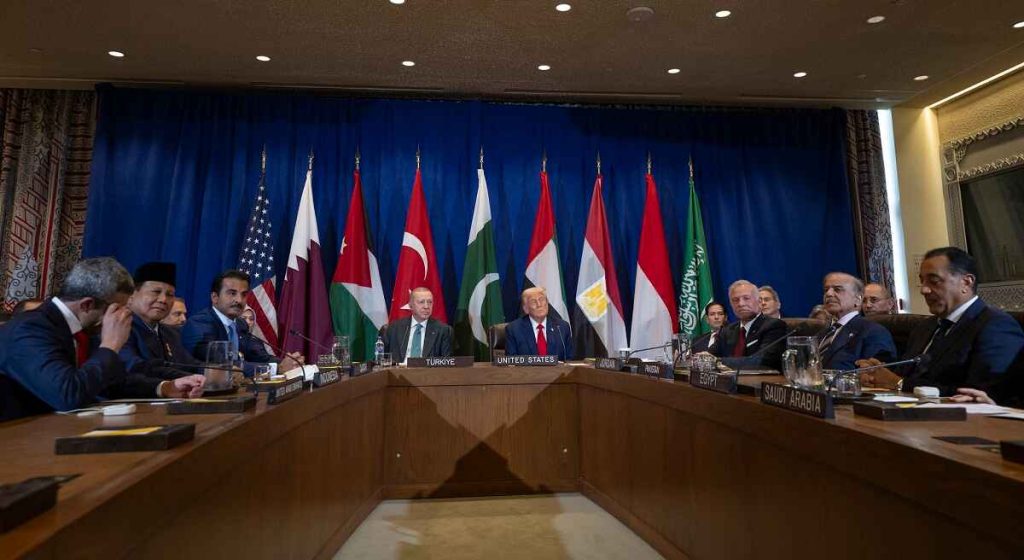
The deal has fostered notable regional alignment, with Arab states like Egypt, Qatar, the UAE, and Saudi Arabia playing key roles in guarantees, aid distribution, and the ISF. This builds on deepened military ties with Israel, even amid public denunciations of the war, as leaked documents reveal joint deployments and training. The agreement’s emphasis on economic reconstruction, potentially funded by Riyadh’s resources, signals a shift toward a new regional economy focused on stability and trade. Leaders from multiple nations convened in Egypt for the signing, expressing support and committing to prevent munitions inflows while facilitating rebuilding. This alignment counters Iranian influence, aligning U.S. interests with Sunni Arab states for a demilitarized Gaza. However, it’s fragile, as exclusions like the Palestinian Authority’s initial absence could strain intra-Palestinian relations, and not all stakeholders are fully onboard.
Will the Gaza Deal End in a Major War?
While the deal aims to prevent escalation, the risk of a major war persists if it unravels. Historical patterns show ceasefires often collapse over “final status” issues, like borders or disarmament. Israel’s military dominance might tempt overreach, undermining U.S. peace efforts and reigniting conflict. If Hamas violates terms—delaying disarmament or rearming covertly—Israel could respond with strikes, potentially drawing in Hezbollah or Iran, leading to a multi-front war. Past failures, like the January 2025 ceasefire broken by airstrikes, highlight this vulnerability. Conversely, sustained pressure from Trump and regional guarantors could avert this, but without addressing root causes like West Bank settlements, the deal might merely defer a larger confrontation. The odds lean toward tension but not inevitable war, depending on compliance monitoring.
In conclusion, the Gaza Peace Deal stands as a critical juncture, offering hope for peace but fraught with challenges. Its success could transform the region, but failure might cement instability for generations.



