

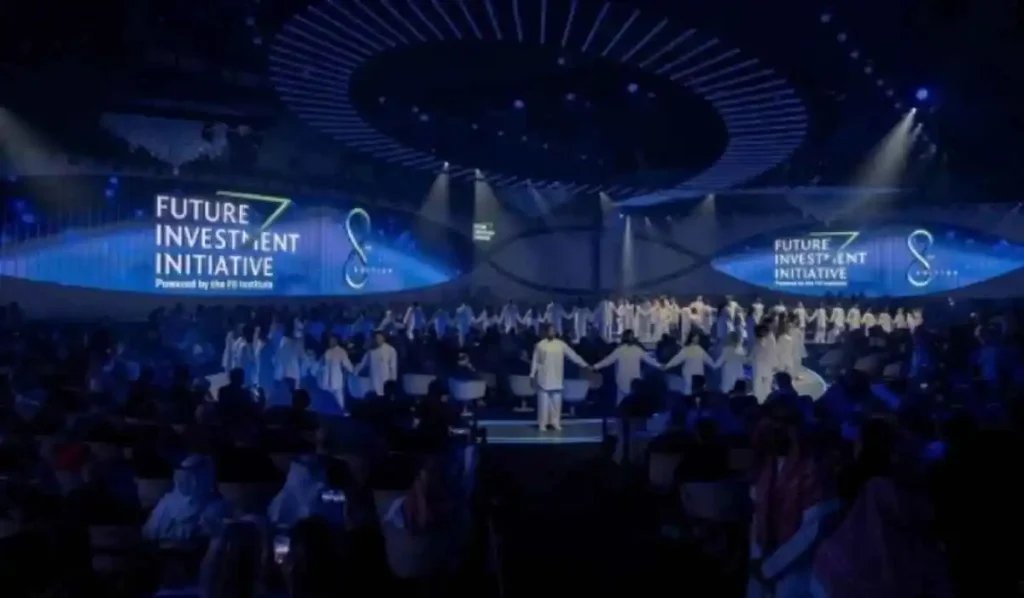
In a significant diplomatic development, Pakistan’s Prime Minister Shehbaz Sharif on the invitation from Saudi Crown Prince Mohammed bin Salman, will participate in the ninth edition of the Future Investment Initiative (FII) Forum, scheduled for October 27-30, 2025, in Riyadh. Often referred to as “Davos in the Desert,” this prestigious annual gathering serves as a pivotal platform for global leaders, investors, and innovators to discuss emerging trends in investment, technology, and economic strategies. The invitation, delivered by Saudi Ambassador Nawaf bin Said Al-Malki during a meeting at the Prime Minister’s House on August 9, 2025, underscores the deepening bilateral relations between Pakistan and Saudi Arabia. During the exchange, Sharif conveyed warm greetings to King Salman bin Abdulaziz and the Crown Prince, while discussions touched on recent regional developments in a cordial atmosphere.
This marks Sharif’s second consecutive appearance at the FII, following his attendance in October 2024, where he engaged in high-level talks on economic and strategic cooperation. As Pakistan navigates ongoing economic challenges, Sharif’s participation in 2025 holds particular promise for fostering new investment opportunities and reinforcing international partnerships.
The Future Investment Initiative: A Premier Global Forum
Launched in 2017, the FII has evolved into one of the world’s foremost investment conferences, aligning closely with Saudi Arabia’s Vision 2030—a transformative blueprint aimed at diversifying the kingdom’s economy beyond oil through innovation, sustainability, and private sector growth. The 2025 edition, themed around impact-driven initiatives, will focus on key areas such as artificial intelligence, robotics, education, healthcare, and sustainability. Attendees can expect sessions on global investment trends, emerging technologies, and strategies to address economic challenges, with a spotlight on rebounding private equity markets—projected to exceed $420 billion in fundraising this year after a dip in 2024.
The forum attracts a diverse array of participants, including heads of state, sovereign wealth fund executives, private equity leaders, and tech innovators. Past editions have facilitated billions in deals, emphasizing sustainable development and cross-border collaborations. For 2025, the agenda includes discussions on actionable frameworks for business models and public policies, building on related events like the FII PRIORITY Miami Summit earlier this year, which explored economic resilience and innovation. This year’s gathering is poised to highlight featured technologies and expected investment announcements, further cementing its role as a catalyst for global economic dialogue.
Why Sharif’s Attendance Matters for Pakistan:
For Pakistan, a nation grappling with fiscal pressures, inflation, and the need for foreign investment, Sharif’s participation in the FII represents a strategic opportunity to attract capital and deepen ties with key allies like Saudi Arabia. The South Asian country has long benefited from Riyadh’s financial support, which has been instrumental in stabilizing its external finances. In recent years, Saudi deposits into Pakistan’s central bank—totaling over $30 billion since the early 2000s—have helped unlock International Monetary Fund (IMF) bailout packages, including a critical one in September 2024 that shored up the $370 billion economy amid a severe crisis. A $3 billion loan from Saudi Arabia, extended in December 2024, exemplifies this ongoing assistance.
Sharif’s 2024 visit to the FII yielded tangible results, with the signing of 34 memoranda of understanding (MoUs) worth $2.8 billion between Pakistan and Saudi Arabia. Seven of these have since materialized into concrete agreements valued at $560 million, spanning sectors like energy, infrastructure, and technology. Building on this momentum, a high-level Pakistani delegation visited Riyadh in late September 2025 to draft a structured economic roadmap, focusing on enhanced trade and investment flows. Sharif has actively invited global investors to explore opportunities in Pakistan’s economy, emphasizing sectors such as renewable energy and digital innovation during recent conferences.
Moreover, the bilateral relationship has expanded beyond economics. On September 17, 2025, Pakistan and Saudi Arabia signed a mutual defense pact, marking a new era in security cooperation. This agreement, which includes provisions for joint military training and potential nuclear-related discussions, reflects Riyadh’s evolving strategic calculus amid regional tensions. For Pakistan, it not only bolsters defense capabilities but also signals economic reliability to investors, as stable security ties often pave the way for increased foreign direct investment (FDI). Saudi Arabia hosts over 2.5 million Pakistani expatriates, whose remittances contribute significantly to Pakistan’s economy, further intertwining the two nations.
In the context of Pakistan’s ongoing IMF engagements and efforts to diversify its economy, the FII offers Sharif a venue to pitch investment prospects directly to global players. With Pakistan seeking deeper ties with the U.S. and other partners at forums like the IMF-World Bank meetings, the Riyadh event could facilitate multilateral deals, helping to address balance-of-payments issues and promote sustainable growth. Sharif’s emphasis on stronger economic linkages with Saudi Arabia and neighboring Gulf states, as highlighted in September 2025 statements, underscores the forum’s role in advancing these goals.
The Global Significance of the FII:
On a broader scale, the FII transcends bilateral engagements, positioning itself as a cornerstone of international economic discourse. Dubbed “Davos in the Desert” for its resemblance to the World Economic Forum, it convenes stakeholders from sovereign funds, private equity firms, and asset managers to tackle pressing global challenges. The 2025 edition is particularly timely, amid a rebound in global private equity and heightened focus on sustainable technologies. By fostering discussions on AI-driven innovations and resilient economic models, the forum aligns with worldwide efforts to achieve the UN Sustainable Development Goals and navigate post-pandemic recovery.
Its significance lies in bridging emerging markets with established economies, as seen in past outcomes like multi-billion-dollar commitments in renewable energy and digital infrastructure. For instance, the event’s emphasis on Vision 2030 has spurred investments in non-oil sectors, influencing global trends in diversification and green finance. In 2025, with anticipated deals in cutting-edge technologies, the FII could catalyze shifts in international investment patterns, promoting inclusive growth amid geopolitical uncertainties.
Events like the FII PRIORITY Miami in February 2025 demonstrated its ripple effect, uniting leaders to devise bold policies for economic resilience. Globally, it amplifies voices from the Middle East and Asia, challenging Western-dominated forums and fostering South-South cooperation.
A Catalyst for Progress
Prime Minister Shehbaz Sharif’s attendance at the 2025 FII Forum not only reaffirms Pakistan’s commitment to robust international partnerships but also positions the country as an active player in global economic conversations. For Pakistan, it promises avenues for vital investments and economic stabilization, while globally, the event continues to drive innovation and collaboration. As the dates approach, all eyes will be on Riyadh for outcomes that could shape the future of sustainable development and cross-border ties.



