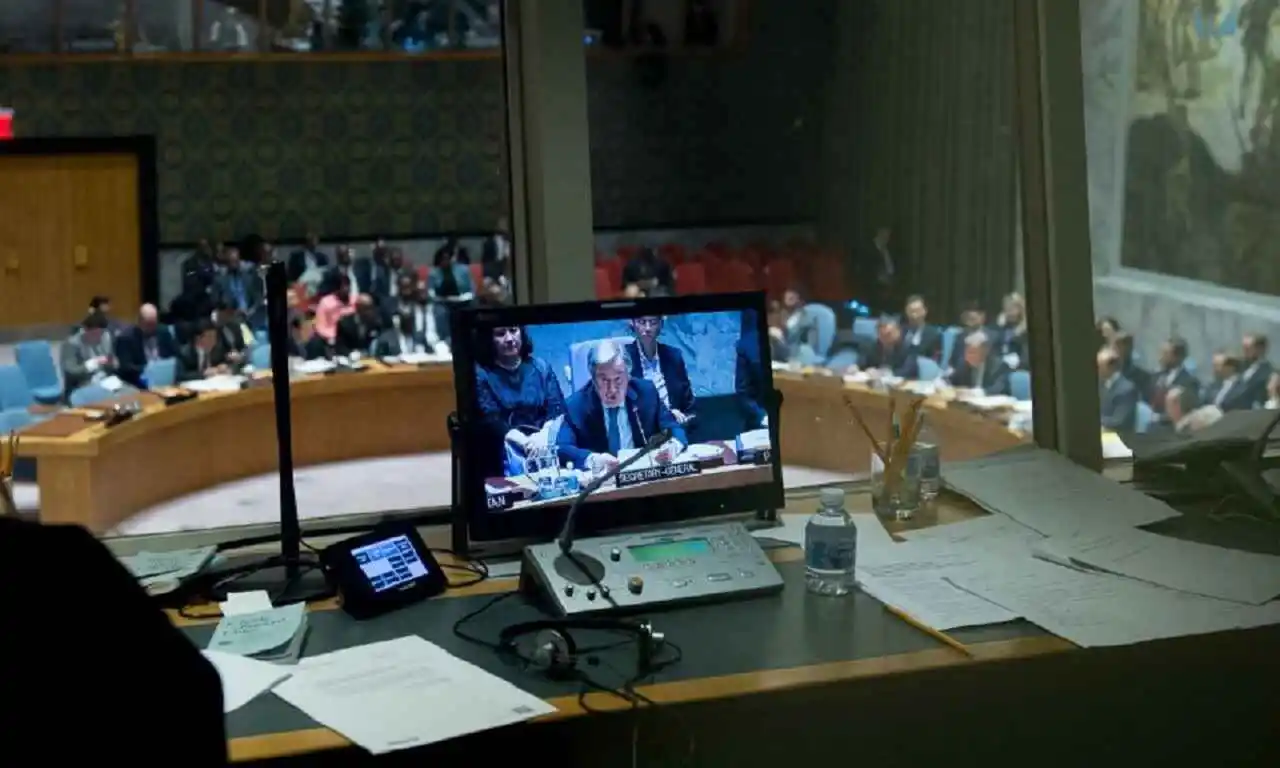
The world’s oldest multilateral institution — the United Nations — is confronting its most serious existential crisis in decades. In a striking warning to member states, UN Secretary-General António Guterres has said the global body faces “imminent financial collapse” unless member states pay owed dues and overhaul outdated financial rules that threaten the organisation’s ability to function.
At the same time, US President Donald Trump has launched a separate initiative dubbed the “Board of Peace”, which some analysts see as a parallel structure to the UN — potentially reflective of a deeper shift in how major powers approach global governance.
The UN’s Financial Crisis: A Warning From the Top
In a letter to all 193 member states, Guterres laid bare the United Nations’ dire financial situation — a crisis driven by unpaid contributions and antiquated budgetary norms. By the end of 2025, the UN had amassed more than $1.56 billion in unpaid dues from member states, more than double the gap the year before.
Under the UN’s current system, members are required to refund unspent portions of their assessed budgets — even if funds were never provided — a paradox that Guterres described as a “Kafkaesque cycle.”
Guterres warned that unless countries either pay in full and on time or agree to reform the financial rules, the organisation could run out of cash as early as July.
Such an outcome would cripple the UN’s core functions, including peacekeeping, humanitarian aid, and development programs, at a time of escalating global crises.
US Funding Cuts and the Board of Peace
A major driver of the UN’s revenue shortfall is non-payment by its most significant contributor — the United States. The US accounts for roughly 22% of the UN’s regular budget, followed closely by China.
Under Trump’s administration, the US has not only delayed or withheld mandatory contributions but also cut voluntary funding to key agencies, reflecting a broader skepticism of multilateral institutions.
Instead, Trump has championed new mechanisms such as the Board of Peace, launched at a global forum earlier this year. The initiative, originally intended to oversee the next phase of a ceasefire in Gaza, has morphed into a broader platform that Trump says could “do pretty much whatever we want to do” with UN collaboration.
The Board reportedly invites countries to join permanent membership for substantial financial contributions (reportedly around $1 billion each), raising questions about whether it is a parallel, pay-to-play model of global leadership.
Allies, Skeptics, and the Politics of Participation
While Trump insists the Board of Peace is inclusive, many traditional Western allies have steered clear or declined invitations. Countries like the United Kingdom, France, and Italy have been cautious, and New Zealand publicly rejected participation, citing concerns over the Board’s undefined purpose and alignment with the UN charter.
Trump also controversially withdrew Canada’s invitation after political tensions between Ottawa and Washington, illustrating how geopolitical friction shapes membership and cooperation.
Beyond diplomatic posturing, these responses reflect hesitation among many states about abandoning the established multilateral system embodied by the UN.
Guterres’ Broader Message: Multilateralism Under Threat
Guterres’ financial warning comes alongside broader critiques of global politics. He has stressed that no single power can resolve the world’s problems and has called for a more multipolar, cooperative system rooted in international law and shared decision-making.
This stance contrasts sharply with unilateral or sphere-of-influence approaches, where dominant powers create alternative forums to advance their agendas.
The Secretary-General has also called for comprehensive reforms, including updated financial rules and greater responsibility from all member states, rather than dependence on one or two major donors.
Does the Board of Peace Undermine the UN?
Critics argue that the Board of Peace, in its current form, risks fragmenting global cooperation:
-
By establishing a selective club of powerful nations, it may marginalise smaller states.
-
Financial prerequisites for participation could privilege wealthy donors over consensus-based engagement.
-
A dual-track system — one anchored in the UN and another in the Board — could lead to duplication of norms and goals, weakening collective action.
Some analysts even view it as a US-led effort to reassert strategic influence amid perceived UN inertia, particularly given the Security Council’s paralysis on key issues like Ukraine, Gaza, and Sudan.
Yet supporters of the Board argue it could complement UN efforts by mobilising resources and political will that the world body currently lacks — especially if key players recommit to peace processes.
The Risk of a Divided Global Order
The juxtaposition of a financial crisis at the UN with the emergence of alternative institutions highlights a deeper geopolitical tension: a battle over how global cooperation should be structured in the 21st century.
Should the world continue to invest in and reform the UN — a centuries-old forum based on inclusivity and law — or pivot toward ad hoc, leader-driven coalitions that promise faster action but less accountability?
Guterres’ warning underscores that the answer matters not just for diplomacy, but for concrete outcomes: peacekeeping missions, humanitarian relief, climate action, and social development programs all depend on robust global institutions.
Choices at a Critical Juncture
The world faces a critical choice: revive and adapt multilateralism through the United Nations, or allow parallel structures like the Board of Peace to redefine global governance.Guterres’ stark assessment of the UN’s financial health reveals how fragile the current system has become. Whether crisis leads to renewed commitment to collective action or further fragmentation will depend on political will, financing decisions, and the willingness of nations to honour shared responsibilities.
In this era of competing visions for world order, the future of institutions like the UN — and of initiatives like the Board of Peace — will shape global cooperation for decades to come.