

This year marks the 25th anniversary of the Shanghai Cooperation Organization (SCO), a milestone that invites reflection on its transformative role in regional security, economic cooperation, and global governance. Established in 2001, the SCO has evolved into one of the world’s most significant regional organizations, uniting countries across Eurasia under principles of mutual trust, equality, and shared development. Its enduring success lies in the so-called “Shanghai Spirit,” which emphasizes respect for sovereignty, dialogue over confrontation, and cooperation over coercion—a model increasingly relevant in today’s turbulent international landscape.
A Brief Background: SCO’s Aims and Objectives
The SCO emerged from the “Shanghai Five” mechanism, which originally focused on resolving border issues and promoting confidence-building measures among China, Russia, Kazakhstan, Kyrgyzstan, and Tajikistan. In 2001, Uzbekistan joined, formally establishing the SCO as a regional organization. Its core objectives are multifaceted: enhancing regional security, promoting economic integration, facilitating cultural and humanitarian cooperation, and strengthening multilateral collaboration. Over the years, the SCO has grown to include eight member states and four observer states, spanning nearly half the world’s population.
The organization’s objectives are guided by the “Shanghai Spirit,” emphasizing mutual trust, mutual benefit, equality, consultation, respect for diverse civilizations, and the pursuit of common development. This philosophy not only serves as the foundation for regional stability but also provides a practical and successful template for international cooperation in an era of increasing geopolitical tension.
SCO in Today’s Global Context
The current international landscape is characterized by turbulence, transformation, and uncertainty. Rising protectionism, unilateralism, and attempts at decoupling disrupt global trade and economic stability. The law of the jungle, hegemony, and power politics continue to challenge the principles of international law and cooperation. In such a scenario, the SCO stands as a bulwark against instability, offering an alternative model based on dialogue, partnership, and collective problem-solving.
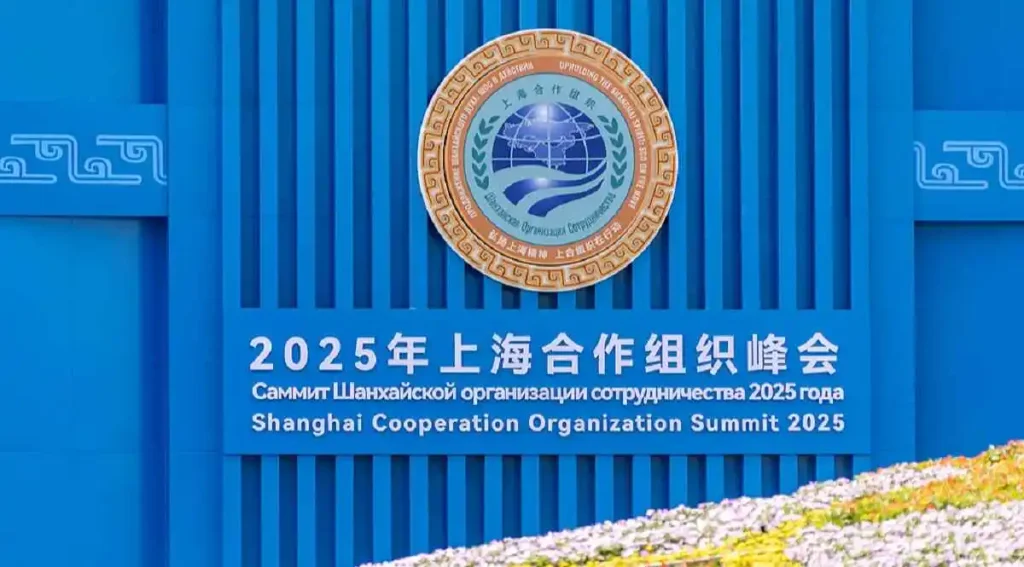
The recent Tianjin Summit in September 2025 reaffirmed the SCO’s role in fostering cooperation across security, economic, and technological domains. Under the conference theme “SCO and the Global Governance Initiative,” leaders highlighted the organization’s potential to contribute to a more just and equitable international order. The SCO demonstrates that unity, rather than division, remains the only viable path forward in addressing global challenges.
Global Governance and the SCO’s Strategic Role
Today, the global governance system suffers from deficits: insufficient representation, eroded authority, and lagging effectiveness. Many small and medium-sized countries aspire for equal participation in global decision-making while upholding an international order grounded in the United Nations and international law. Recognizing this, President Xi Jinping introduced the Global Governance Initiative, emphasizing sovereign equality, adherence to international law, multilateralism, people-centered approaches, and practical action.
The SCO is uniquely positioned to implement this vision. Composed largely of emerging economies and developing countries, the organization represents the collective rise of the Global South. By aligning with the Global Governance Initiative, the SCO not only strengthens regional cooperation but also contributes to global stability, justice, and equitable development. Its initiatives resonate with China’s broader Global Development Initiative, Global Security Initiative, and Global Civilization Initiative, forming an integrated framework that promotes prosperity, security, mutual trust, and justice.
Pakistan and the SCO: A Strategic Partnership
Pakistan joined the SCO as a full member in 2017, reflecting its growing role in regional security and development. Its membership carries profound significance both for Pakistan and the organization. Pakistan brings strategic depth, geographical importance, and a commitment to multilateral cooperation that enhances the SCO’s capacity to address regional and global challenges. As an active member, Pakistan has contributed to the organization’s priorities in security, economic integration, and cultural exchange.
In terms of security, Pakistan works alongside SCO partners to combat terrorism, separatism, and extremism—the so-called “three evils”—while addressing transnational crime and cyber threats. Economically, Pakistan benefits from deeper integration into regional trade and investment networks, facilitating industrial growth, technological development, and stable supply chains. Initiatives in infrastructure, energy, and the digital economy further amplify Pakistan’s role as a key connector between Central and South Asia.
Culturally and diplomatically, Pakistan’s participation strengthens people-to-people ties and fosters mutual understanding across diverse civilizations. Its engagement reinforces the SCO’s principle of consultation and consensus-building, ensuring that the voices of all members, large and small, are heard and respected. The organization provides Pakistan with a platform to project its foreign policy priorities, contribute to collective security, and support sustainable development initiatives across the region.
Contributions and Benefits: Pakistan’s SCO Journey
Pakistan’s contributions to the SCO are tangible. It actively participates in joint military exercises, counterterrorism collaborations, and intelligence-sharing mechanisms, enhancing the collective security architecture. Economically, Pakistan’s involvement facilitates regional connectivity, particularly through projects linking it to Central Asia, China, and other SCO members. These projects create jobs, improve infrastructure, and open avenues for trade expansion.
Conversely, Pakistan benefits from SCO-led initiatives in technology, education, and innovation. Collaborations in artificial intelligence, digital infrastructure, and industrial development help cultivate new growth drivers, bolster productivity, and enhance the standard of living for its citizens. By engaging with other emerging economies in multilateral projects, Pakistan gains valuable experience in governance, policy formulation, and international cooperation.
SCO, the Global South, and a Shared Future
The SCO embodies the aspirations of the Global South. Its members, including China and Pakistan, are champions of multilateralism, regional stability, and equitable development. By collectively advocating for an inclusive and just international order, the SCO counters the concentration of power and promotes democracy in international relations. It safeguards the rights and interests of developing nations, supports economic globalization that is fair and inclusive, and upholds the international legal order.
China and Pakistan, as all-weather partners, provide a model of bilateral trust and cooperation. Their shared commitment to strategic collaboration strengthens the SCO platform, advances regional prosperity, and amplifies the voice of the Global South in global governance. High-level coordination between Beijing and Islamabad ensures practical outcomes—from small-scale livelihood projects to large infrastructural and technological initiatives—that directly benefit citizens and reinforce stability across the region.
Looking Forward: SCO as a Blueprint for Stability and Development
As we celebrate the 25th anniversary of the SCO, it is clear that the organization’s achievements are rooted in its founding principles. Upholding the “Shanghai Spirit,” the SCO has successfully promoted dialogue over division, consultation over coercion, and cooperation over confrontation. Its growing influence demonstrates the effectiveness of multilateralism in an era of turbulence and uncertainty.
The path ahead requires persistent effort. Expanding economic integration, fostering innovation, deepening security cooperation, and championing global governance are central to the SCO’s future relevance. By providing a platform for the Global South, the SCO ensures that emerging and developing countries have a voice in shaping the rules of the international system, promoting peace, justice, and shared prosperity.
President Xi Jinping’s call to implement the Global Governance Initiative reinforces this mission. Together with Pakistan and other member states, the SCO can uphold UN-centered international order, resist hegemonic pressures, and advance inclusive development. It is not only a regional organization but also a global platform where principles of fairness, equality, and cooperation guide practical solutions to shared challenges.
A Model for Cooperation in a Turbulent World
“The journey may be long, but perseverance will see it through.” The Shanghai Cooperation Organization, now a quarter-century old, exemplifies a successful, principled approach to regional and global governance. Its enduring relevance lies in its ability to unite nations, promote development, safeguard security, and represent the aspirations of the Global South.
Pakistan’s active engagement highlights the practical benefits of this multilateralism: enhanced security, stronger economic connectivity, and deeper cultural and diplomatic ties. As SCO members continue to collaborate, innovate, and lead, the organization offers a blueprint for a more stable, prosperous, and equitable world—one that prioritizes dialogue over conflict, cooperation over confrontation, and shared progress over narrow self-interest.
In commemorating 25 years of the SCO, we are reminded that solidarity, mutual trust, and principled action remain the cornerstones of a peaceful and prosperous future. By embracing the Shanghai Spirit and implementing the Global Governance Initiative, the SCO and its members—including Pakistan—stand poised to lead the way toward a community with a shared future for humanity.



