

HomeGlobal AffairsDiplomacy and Foreign PolicyIs America's Military Shield Over Europe Coming to an End?

Is America’s Military Shield Over Europe Coming to an End?

Date:

Related stories

Why Trump’s “You’re fucking crazy” Remark Still Defines His View of Netanyahu

For years, Donald Trump and Benjamin Netanyahu were widely...

Pakistan’s Lithium Opportunity: From Discovery to Industrial Power

Pakistan’s confirmation of lithium in underground geothermal formation water...

How Japan and UNICEF Are Helping Millions of Pakistani Children Thrive

The Japan and UNICEF Pakistan partnership continues to play...

WHO: Pakistan Can End Wild Poliovirus Transmission with Sustained Efforts

The World Health Organization (WHO) has reaffirmed its unwavering...
spot_img

For more than seven decades, American troops stationed across Europe have symbolized Washington’s commitment to NATO and the continent’s security. From Germany and Italy to Poland and the Baltic states, the U.S. military presence has acted as both a deterrent against adversaries and a reassurance for European allies.

That assumption is now being tested.

The Trump administration has officially begun a comprehensive review of the U.S. military posture in Europe, arguing that the alliance must transition toward a model in which European nations assume primary responsibility for conventional defense. The Pentagon says the review is intended to create a “stronger, more equitable, and sustainable” NATO rather than signal an immediate withdrawal.

Yet the geopolitical implications extend well beyond troop numbers. The review raises a broader question: Is Washington redefining NATO from an American-led security alliance into a Europe-led defense system?

The Review Is About More Than Military Bases

The latest announcement did not emerge in isolation.

For months, senior officials in the Trump administration have argued that many European allies continue to depend excessively on American military power despite significantly increasing their own economic capacity. Defense Secretary Pete Hegseth had already indicated that Washington intended to reassess deployments, while Under Secretary of Defense Elbridge Colby framed the review as part of NATO’s transition toward greater European responsibility.

Officially, the review focuses on force posture and alliance burden-sharing. Strategically, however, it reflects a larger shift in U.S. foreign policy priorities.

Why Should America Pay for Europe’s Defense?

Donald Trump has consistently argued that NATO members should contribute more to their own security.

His criticism has never been directed solely at military spending percentages. Instead, it reflects a broader belief that America’s global military commitments should directly serve U.S. national interests rather than indefinitely subsidize allied defense.

From this perspective, maintaining large permanent troop deployments overseas represents a legacy of the post-Cold War era that deserves reassessment.

The administration’s message is increasingly clear:

Europe has the economic strength, industrial capacity, and technological base to defend itself more independently.
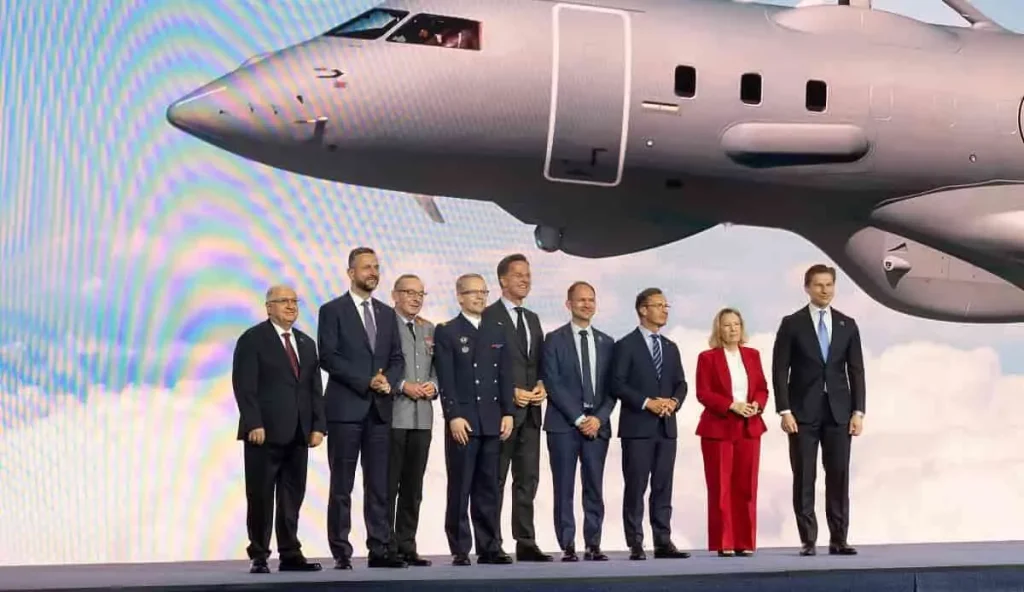
Why Does Israel See Türkiye as Its Next Major Strategic Threat, Photo NATO Media

The Iran War Changed Washington’s Calculations

One of the most overlooked factors behind the review is the political fallout from the recent Iran conflict.

Trump administration officials have repeatedly criticized some European governments for what they viewed as limited political support during the crisis. The timing of the review follows those tensions and reinforces Washington’s expectation that allies should assume greater responsibility for regional and collective defense.

This does not necessarily mean the United States intends to disengage from Europe.

Rather, Washington appears determined to redefine the terms of its leadership.

Europe Is Already Preparing for Strategic Autonomy

Ironically, Europe’s own defense strategy has been evolving in the same direction.

Russia’s invasion of Ukraine accelerated discussions about expanding European defense industries, increasing ammunition production, strengthening rapid deployment forces, and reducing dependence on non-European military supply chains.

Recent developments also show European governments pressing for greater domestic control over defense manufacturing and technology, even as they continue purchasing American systems.

The Pentagon review may therefore accelerate a transition that was already underway.

Russia Could See Opportunity—and Risk

Any reduction or restructuring of U.S. military forces will inevitably be watched closely in Moscow.

A smaller American footprint could be interpreted by Russia as evidence of changing U.S. strategic priorities.

However, the opposite outcome is also possible.

If Europe responds by substantially increasing defense investment, improving military integration, and expanding indigenous capabilities, NATO could become less dependent on Washington while remaining militarily stronger overall.

The final outcome depends less on troop numbers than on Europe’s willingness to convert political promises into operational capabilities.

Germany Remains at the Center of the Debate

Germany hosts one of America’s largest military presences outside the United States and serves as a logistical hub for NATO operations.

Any significant restructuring would have consequences extending beyond bilateral U.S.-German relations.

It would influence:

  • NATO command structures,
  • logistics supporting Eastern Europe,
  • military readiness,
  • transatlantic deterrence,
  • and Europe’s broader security architecture.

For that reason, analysts expect any changes to be gradual rather than abrupt.

Is This About Asia More Than Europe?

Another strategic interpretation centers on China.

American defense planners increasingly describe the Indo-Pacific as the principal theater of long-term strategic competition.

Reducing permanent commitments in Europe could free military resources for:

  • Indo-Pacific naval operations,
  • deterrence around Taiwan,
  • advanced missile deployments,
  • artificial intelligence and cyber capabilities,
  • and space-based defense programs.

Under this scenario, Europe would assume greater responsibility for regional security while the United States concentrates more heavily on global power competition with China.

A New NATO, Not Necessarily a Smaller NATO

The review does not automatically mean NATO is weakening.

Instead, it may represent the alliance’s next phase of evolution.

For decades, NATO relied heavily on American military dominance.

The emerging model could distribute responsibilities more evenly:

  • Europe providing larger conventional forces.
  • The United States focusing on strategic deterrence, intelligence, advanced technologies, and nuclear capabilities.
  • Joint operations continuing through integrated command structures.

If implemented successfully, such a model could make NATO more resilient rather than less dependent on any single member.

Broader reassessment

The Trump administration’s review of America’s military presence in Europe is not simply an accounting exercise over troop deployments. It represents a broader reassessment of how the United States defines alliance leadership in an era shaped by the Ukraine war, tensions with Iran, and growing competition with China.

Whether this review ultimately results in troop reductions, force redistribution, or a reconfigured NATO posture, its strategic message is unmistakable: Washington wants Europe to become the principal guarantor of its own conventional defense while America shifts toward a more selective and globally focused security role.

The central question is no longer whether the United States remains committed to NATO, but whether Europe is prepared to lead a stronger alliance with greater responsibility.

Mark J Willière
Mark J Willière
Mark J Williere, is a Freelance Journalist based in Brussels, Capital of Belgium and regularly contribute the THINK TANK JOURNAL

Latest stories

Publication:

spot_img

LEAVE A REPLY

Please enter your comment!
Please enter your name here

