
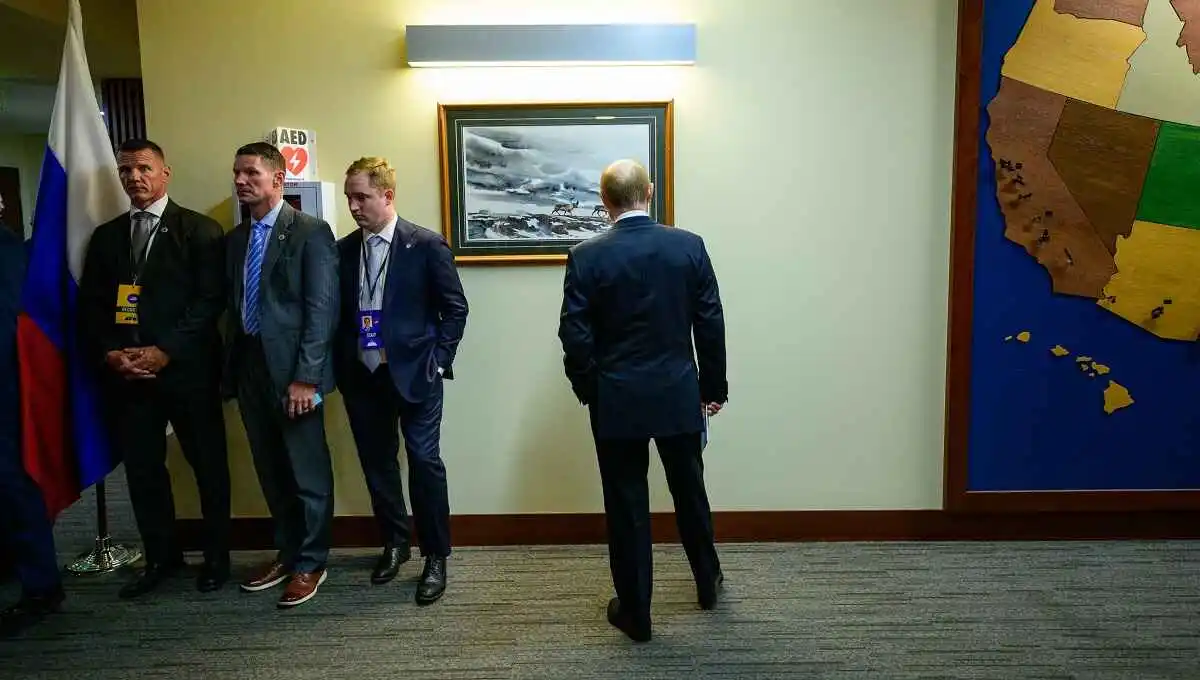
The conflict in Ukraine shows no signs of abating, with recent diplomatic setbacks and military escalations heightening global concerns. The cancellation of a planned summit between U.S. President Donald Trump and Russian President Vladimir Putin has coincided with intensified Russian strikes and nuclear exercises, raising questions about Moscow’s intentions.
Are Tensions Rising in Ukraine After the Trump-Putin Meeting Was Canceled?
The abrupt cancellation of a proposed meeting between Trump and Putin, intended to address the ongoing war in Ukraine, has fueled speculation about escalating tensions. Initially slated for Budapest in the coming weeks, the summit was put on hold after Russia rejected an immediate ceasefire proposal. Trump described the potential talks as a “waste of time,” citing unproductive discussions between U.S. Secretary of State Marco Rubio and Russian Foreign Minister Sergey Lavrov. This development came amid U.S. efforts to broker peace, but Moscow’s stance has led to a diplomatic stalemate.
In the immediate aftermath, Russia launched a large-scale air assault on Ukraine on October 22, 2025, involving over 400 drones and missiles. The attacks caused widespread power outages, set homes ablaze, and resulted in at least two deaths in Kyiv and other regions. Ukraine responded with strikes on Russian targets, including a successful hit on a major explosives plant supplying Moscow’s military. These exchanges mark a continuation of Russia’s long-range campaign targeting Ukrainian energy infrastructure ahead of winter, exacerbating humanitarian challenges. Analysts note that the timing—directly following the meeting’s delay—suggests a deliberate escalation, with both sides pounding each other in heavy overnight operations. As uncertainty surrounds U.S.-led peace efforts, these events indicate rising instability in the region.
Why Has Russia Suddenly Started Strategic Nuclear Forces Training?
Russia’s initiation of strategic nuclear forces training on October 22, 2025, has drawn international scrutiny, particularly given its proximity to diplomatic tensions. President Vladimir Putin personally oversaw the exercises via video link from Moscow, which involved all components of Russia’s nuclear triad: land-based, sea-based, and air-based systems. The drills included the launch of a Yars intercontinental ballistic missile from the Plesetsk Cosmodrome, preparations by the crew of the K-117 Bryansk nuclear submarine, and the takeoff of a Tu-95MS strategic missile carrier.
According to official statements, the training aimed to test the preparedness of military command bodies and enhance the practical skills of operational personnel, with all objectives reportedly accomplished. While described as routine and scheduled—following similar NATO exercises a week prior—the timing aligns with the Trump-Putin summit delay and ongoing strikes in Ukraine. This comes amid broader nuclear discussions, including Russia’s proposal for a one-year extension of the New START treaty, which limits strategic nuclear arms to 1,550 for both the U.S. and Russia. The exercises underscore Russia’s emphasis on nuclear readiness, potentially as a response to perceived shifts in U.S. policy or to assert deterrence amid the protracted conflict.
Is Russia Trying to Send a Message?
The recent wave of Russian attacks on Ukraine, coupled with nuclear drills, appears designed to convey a strong message of resolve. Following the cancellation of the Trump-Putin meeting, Russia executed deadly drone and missile strikes across Ukraine on October 22, 2025, targeting energy infrastructure and causing significant disruptions. These operations, which killed civilians and wounded many, were framed by Moscow as responses to Ukrainian actions, but their scale suggests a broader strategic intent.
Concurrently, the nuclear exercises—featuring high-profile footage released by the Russian Defence Ministry—highlight Russia’s capability to project power beyond conventional warfare. Independent verification of the footage’s locations remains unconfirmed, but the display of intercontinental missiles, submarines, and bombers serves as a reminder of Moscow’s nuclear arsenal. In the context of rejected ceasefires and U.S. involvement, these moves may aim to deter further Western support for Ukraine, signal unwillingness to concede territory, and test international resolve. Trump’s suggestion to freeze the conflict at current frontlines has been met with mixed reactions, but Russia’s actions indicate a preference for maintaining pressure rather than negotiation.
Major Threat to European Countries
Russian drones have emerged as a significant concern for European security in 2025, extending the Ukraine conflict’s ripple effects beyond its borders. Incursions into NATO airspace, such as those into Poland starting September 9, 2025, have prompted deterrence measures, though hybrid threats like disinformation persist. Drones have been spotted over military bases in the UK and other nations, testing defenses and raising alarms about low-cost, hard-to-detect unmanned aerial vehicles (UAVs).
These operations are part of a broader hybrid warfare strategy, combining physical intrusions with propaganda to probe European vulnerabilities. While not yet causing direct confrontations, the incursions underscore risks of escalation, with experts warning of potential threats to airports and critical infrastructure. NATO allies, including Estonia, face challenges from Russian electronic warfare and drones, prompting calls for enhanced countermeasures. As incursions continue, they represent a growing asymmetric threat, exploiting gaps in traditional air defenses and straining transatlantic alliances.
Can a European Anti-Drone Wall Stop ?
In response to Russian drone incursions, the European Union is advancing plans for an “anti-drone wall,” a multi-layered defense system along its eastern flank. Aimed at completion by 2027, the initiative involves sensors, tracking systems, and counter-drone weapons to detect, monitor, and neutralize UAVs. EU leaders, including Commission President Ursula von der Leyen, have endorsed expanding the concept continent-wide, with rollout potentially starting next year in some areas.
The wall, spanning approximately 4,000 km, draws support from NATO’s AI-driven approaches for shared sensors and rapid response. However, challenges persist: political divisions, with France and Germany reportedly blocking aspects, have stalled progress. Critics highlight risks of technological failures and the low cost of drones, which could overwhelm defenses. While the system could mitigate immediate threats post-Ukraine war, its effectiveness depends on unified funding—potentially €140 billion—and integration with existing NATO frameworks. Ultimately, it represents a proactive step, but success hinges on addressing hybrid elements like disinformation alongside physical countermeasures.
The cancellation of the Trump-Putin meeting has amplified tensions in Ukraine, intertwined with Russia’s nuclear posturing and drone activities. As Europe bolsters defenses like the anti-drone wall, the region braces for potential further escalations in this evolving conflict.

