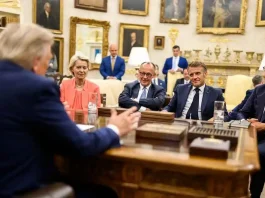
In a sharply worded address at the World Economic Forum in Davos, Switzerland, on January 20, 2026, French President Emmanuel Macron delivered what many interpret as Europe’s firmest public rebuke yet to US President Donald Trump. Without naming Trump directly, Macron declared: “We do prefer respect to bullies. And we do prefer rule of law to brutality.”
The statement comes amid rapidly escalating transatlantic tensions, fueled by Trump’s aggressive trade threats, territorial ambitions over Greenland, and the public release of private diplomatic messages. Macron’s remarks underscore a growing European resolve to defend sovereignty, multilateralism, and international norms against coercive tactics.
Escalating Tensions: Tariffs, Greenland, and Diplomatic Fallout
The backdrop to Macron’s speech is a series of high-stakes confrontations:
- Trump’s Tariff Threats — The US president has vowed to impose 200% tariffs on French wine, champagne, and other goods from several European nations unless Europe yields to US demands, including facilitating control over Greenland (a Danish autonomous territory). Trump framed these tariffs as leverage, stating they would pressure allies until concessions are made.
- Greenland Ambitions — Trump has repeatedly insisted that US control of Greenland is essential for national and global security, even linking it to unrelated issues like the Nobel Peace Prize. France has responded by reinforcing its military presence in the Arctic, including additional personnel in Nuuk.
- Leaked Private Messages — Trump published exchanges showing Macron’s expressed confusion over US actions on Greenland and a French proposal for a G7-style meeting in Paris (potentially including Russian representatives on the margins of discussions involving Ukraine). Macron’s responses in those messages highlighted a desire for cooperation but bewilderment at the approach.
These developments have prompted France and the EU to consider activating the bloc’s anti-coercion instrument, which could restrict US companies’ access to European markets in retaliation.
Macron emphasized that Europe “should not hesitate to deploy” available tools to protect its interests when “the rules of the game are not respected.” He warned against a slide into a world dominated by the “law of the strongest,” which risks “vassalization” of allies and erodes collective governance.
Macron’s Core Message: Cooperation Over Coercion
Speaking to global business and political leaders, Macron painted a picture of a world veering toward instability and “normalized conflict,” contrasting it with calls for peace, stability, predictability, and cooperation to tackle global challenges.
Key excerpts from his address include:
“We need more growth. We need more stability in this world, but we do prefer respect to bullies. And we do prefer rule of law to brutality.”
“It’s not a time for new imperialism or new colonialism. This is a time of cooperation in order to fix these three global challenges for our fellow citizens.”
“To remain free, one must be feared, and to be feared, one must be powerful. To be powerful in this brutal world, we must act faster and stronger.” (referencing a prior military-focused speech)
He urged Europe to accelerate innovation, boost private investment, and strengthen strategic autonomy—echoing themes from European Commission President Ursula von der Leyen, who also pitched “European independence” at Davos in response to Trump’s worldview.
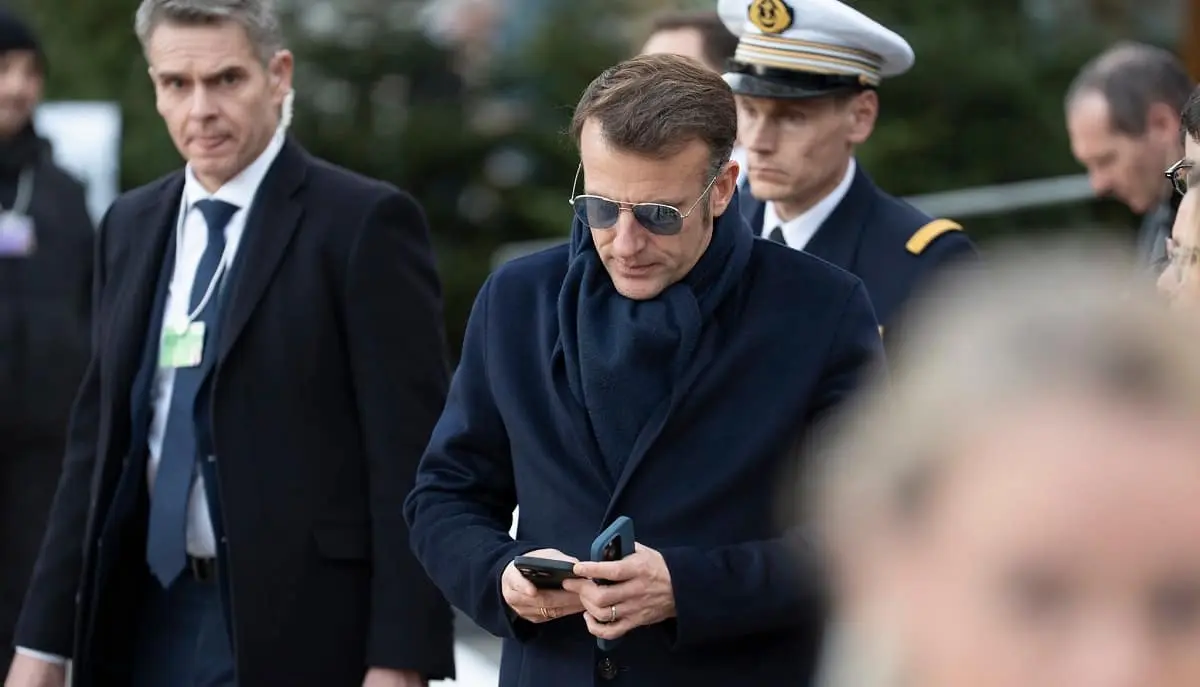
The French leader’s appearance—complete with aviator sunglasses—added a layer of symbolic defiance, drawing chuckles from the audience when he wryly noted the shift from peace to “instability and imbalance.”
Broader Implications for Transatlantic Relations
Macron’s speech arrives just ahead of Trump’s own anticipated address at Davos on January 21, 2026, where the US delegation—including Secretary of State Marco Rubio and special envoy Steve Witkoff—is expected to dominate discussions. No formal Macron-Trump meeting is currently planned, though potential talks on Ukraine and other issues could emerge.
The episode highlights deepening fractures in the NATO alliance and EU-US ties:
- Trade Wars — Tariffs viewed by Washington as geopolitical tools, but criticized by Europe as counterproductive and anti-cooperative.
- Arctic Security — Greenland’s strategic importance in a warming climate and shifting power dynamics.
- Ukraine and Global Order — Macron’s push for inclusive dialogue contrasts with unilateral US moves.
French officials and EU leaders frame the response as pragmatic defense rather than confrontation—preferring multilateral rules and mutual respect over power plays.
Why Macron’s Words Matter Now
As the Davos 2026 forum unfolds against a backdrop of normalized great-power competition, Macron’s clear message resonates beyond France: Europe will not be subordinated or intimidated. By choosing “respect over bullies” and “rule of law over brutality,” the French president has signaled that transatlantic partnership must be based on equality and shared norms—not threats or coercion.
With an extraordinary EU summit scheduled for Thursday and ongoing debates over strategic autonomy, Macron’s Davos intervention may prove a defining moment in recalibrating relations with the US under Trump’s second term. The world is watching to see whether cooperation or confrontation prevails.