
As tensions continue to simmer between the United States and Iran, one question is increasingly dominating diplomatic discussions across the Middle East: Why do ceasefires repeatedly collapse when Israel is involved?
The latest round of violence in Lebanon and the Gulf has once again exposed a recurring pattern. While Washington attempts to negotiate ceasefires and diplomatic off-ramps, military operations on the ground often continue. Iran has repeatedly argued that Israeli attacks in Lebanon and Gaza are undermining efforts to reduce tensions between Tehran and Washington. In fact, Iranian officials have gone as far as suspending negotiations with the United States, claiming that ceasefires cannot be selective and that violations in Lebanon are effectively violations of broader regional understandings.
The issue is no longer simply about individual military operations. It has become a central question affecting the future of diplomacy, regional stability, and the possibility of preventing a wider Middle Eastern war.
The Problem Is Not Just Iran and America Anymore
Many international observers continue to view the crisis through the lens of US-Iran relations.
However, recent events suggest that the real obstacle may lie elsewhere.
The Trump administration has repeatedly sought to separate the Iran file from the fighting in Lebanon. Washington has brokered multiple ceasefire arrangements between Israel and Lebanon while simultaneously attempting to keep diplomatic channels with Tehran open. Yet almost every ceasefire has faced immediate challenges because military operations continued after agreements were announced.
This has created a situation where diplomacy advances on paper while conflict continues on the ground.
For Iran, this is evidence that the United States either cannot or will not restrain Israel.
For Washington, it creates growing difficulties in convincing Tehran that negotiations remain worthwhile.
Why Israel Views Ceasefires Differently
To understand why ceasefires repeatedly break down, it is important to examine Israel’s security calculations.
Israeli leaders argue that ceasefires should not prevent military action against what they describe as immediate threats from Hezbollah and other Iran-backed groups. Israeli officials have consistently maintained that military operations will continue whenever they believe Hezbollah is rebuilding capabilities or preparing attacks. Even after recent ceasefire announcements, Israeli leaders publicly stated that operations in southern Lebanon would continue under what they describe as self-defense provisions.
From Israel’s perspective, ceasefires are tactical pauses rather than permanent constraints.
This interpretation differs significantly from how Iran, Hezbollah, and many regional actors understand ceasefire agreements.
The result is a constant cycle of accusations and counteraccusations regarding violations.
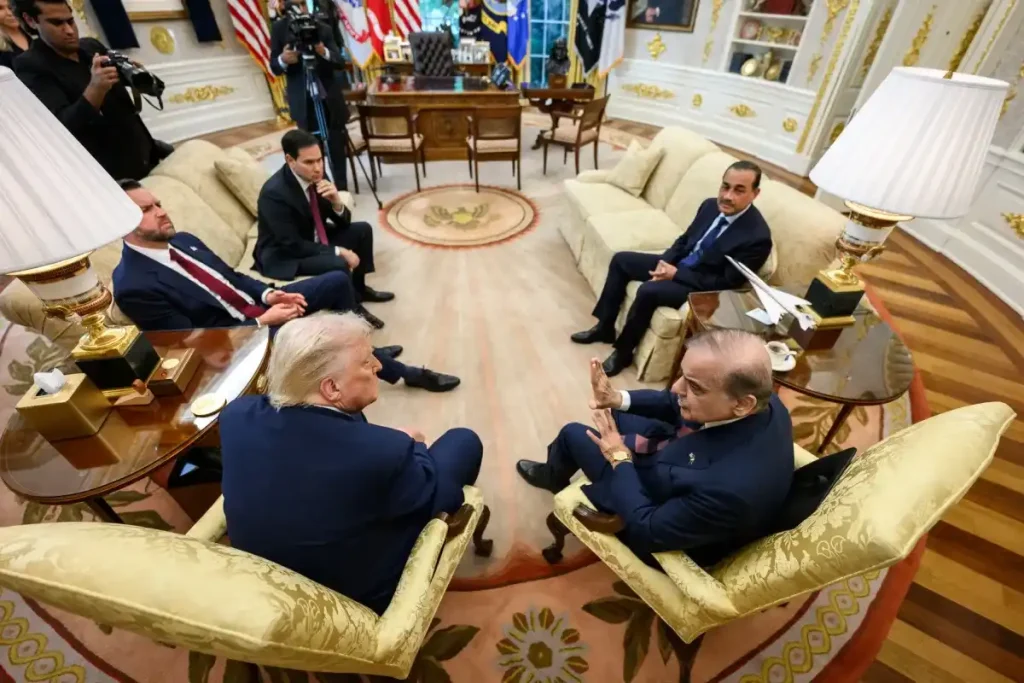
Trump’s Dilemma: Can Washington Control Its Closest Ally?
One of the most revealing aspects of the current crisis has been reports of tension between President Donald Trump and Israeli Prime Minister Benjamin Netanyahu.
Several reports indicate that Trump became frustrated with continued Israeli military escalation at a time when his administration was attempting to advance diplomatic initiatives. Despite Washington’s efforts to broker agreements, fighting continued in Lebanon even after ceasefire announcements.
This raises an uncomfortable question for American policymakers.
Can the United States successfully negotiate with Iran if Israel continues military operations that Tehran views as ceasefire violations?
Iranian leaders clearly believe the answer is no.
Their position has become increasingly explicit: there can be no meaningful negotiations while Israeli attacks continue.
Why Iran Says “A Ceasefire Means All Fronts”
Iran’s position is strategically important.
Tehran argues that any ceasefire involving the United States must apply not only to direct US-Iran interactions but also to conflicts involving Israel, Lebanon, and Gaza. Iranian officials have repeatedly warned that Israeli attacks threaten ongoing negotiations and could cause diplomatic talks to collapse entirely.
This broader interpretation reflects Iran’s regional strategy.
Rather than viewing conflicts separately, Tehran increasingly treats them as interconnected components of a larger regional confrontation.
As a result, Israeli military actions in Lebanon can directly influence negotiations occurring hundreds of kilometers away.
The Hezbollah Factor Makes Every Ceasefire Fragile
Another major challenge is that Hezbollah itself has not formally signed many of the ceasefire arrangements being negotiated.
Several recent agreements have been reached between governments while Hezbollah remained outside the formal negotiating process. The group has subsequently rejected some arrangements, insisting that Israeli forces must fully withdraw before hostilities can end. Fighting has often continued despite diplomatic announcements.
This creates a structural weakness.
A ceasefire can be announced by governments, but if armed actors on the ground reject its terms, implementation becomes extremely difficult.
Israel cites Hezbollah attacks as justification for continued operations.
Hezbollah cites Israeli operations as justification for continued resistance.
The cycle perpetuates itself.
Is Israel Trying to Strengthen Its Position Before Any Future Deal?
Many regional analysts believe Israel’s actions are driven by long-term strategic calculations.
Israel may calculate that future negotiations will eventually occur and therefore seeks to maximize its military and territorial advantages beforehand. Recent statements suggest Israel intends to maintain security zones and operational freedom in parts of southern Lebanon even under ceasefire arrangements.
If this assessment is correct, ceasefires become less about ending conflict and more about shaping the conditions under which future negotiations take place.
Such an approach may provide short-term military advantages but risks undermining trust in diplomatic processes.
The Economic Cost of Endless Ceasefire Violations
The consequences extend beyond military and political considerations.
Every renewed exchange of fire affects energy markets, shipping routes, investor confidence, and regional economic development. Markets have repeatedly reacted to signs of both escalation and de-escalation, demonstrating how sensitive the region has become to security developments. Hopes for a broader US-Iran understanding have boosted investor confidence, while renewed hostilities quickly reverse those gains.
The Middle East’s economic future increasingly depends on whether regional actors can create credible and enforceable ceasefire mechanisms.
Without that confidence, instability itself becomes a permanent economic burden.
Is the Real Goal Peace or Strategic Advantage?
Perhaps the most important question concerns intent.
Are ceasefires being used as genuine tools for peace, or are they increasingly becoming instruments of strategic positioning?
Critics argue that repeated military actions following ceasefire announcements undermine public confidence in diplomacy. Supporters of Israel’s approach counter that security threats require continued vigilance and cannot be ignored simply because political agreements exist.
Regardless of which perspective one adopts, the reality is clear.
Repeated violations make future agreements harder to negotiate and even harder to enforce.
Trust, once damaged, becomes difficult to restore.
Conclusion: The Future of Middle East Peace May Depend on This Question
The latest tensions between Iran, Israel, and the United States reveal a deeper challenge facing the region.
The issue is no longer simply whether a ceasefire can be negotiated.
The real question is whether a ceasefire can actually be respected.
Iran increasingly argues that Israeli military actions are undermining diplomacy. Washington finds itself struggling to balance support for Israel with its desire to avoid a wider regional war. Israel insists that security threats require continued military flexibility. Meanwhile, Lebanon and the broader region continue paying the price.
If ceasefires continue to be treated as temporary pauses rather than binding commitments, the Middle East may find itself trapped in a cycle where peace agreements are announced regularly but peace itself never arrives.
And that may be the greatest danger facing the region today.